
The Tell Is On The Front Fender
Highway Patrol’s Fake Cop Cars: When the CHP Walked Away
By Badges & Chrome · researched and verified from period records and primary sources · About the research →
About this VIDEO
-
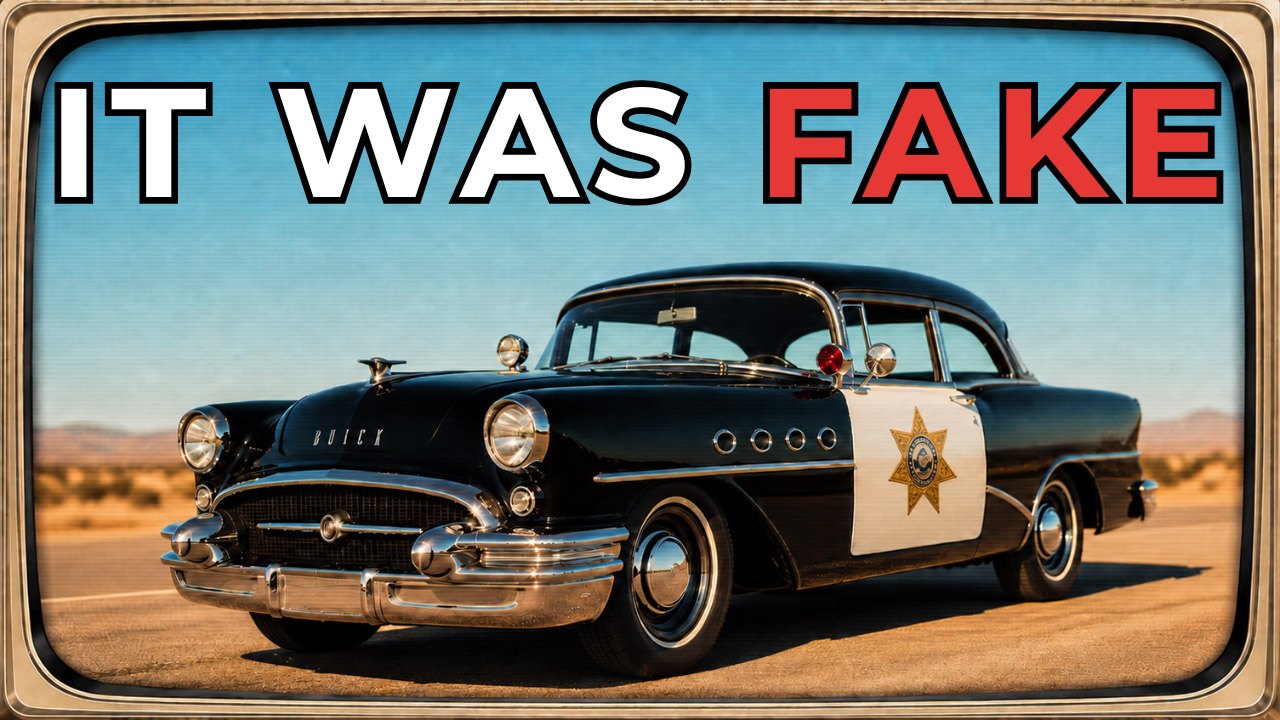
A show about the California Highway Patrol, disowned by the California Highway Patrol, filmed in fake police cars.
Halfway through its run, Highway Patrol lost access to genuine squad cars and had to improvise on a weekly schedule. What the producers substituted is still visible in reruns, and the tell is a row of small holes on a Buick’s front fender.
-
Era
1955–1959
-
Department
California Highway Patrol, and its fictional stand-in
-
Runtime
17:22
-
Published
Jul 29, 2026
1. Introduction
-
Why could only police buy the 1955 Buick Century Model 68?
Far more than most viewers realise, and for much of the run they were not police cars at all. Highway Patrol premiered on 3 October 1955 and ran 156 episodes across four seasons. The California Highway Patrol supported it strongly at first, lending the production genuine squad cars including the rare 1955 Buick Century two-door built exclusively for the CHP.
Then, in mid-1956, the CHP dropped its support over differences in storylines and presentation and refused to supply any more squad cars. With a broadcast schedule that would not wait, the producers grabbed an incorrect 1956 Buick Super four-door hardtop to finish the season, ordered accurate replicas for 1957, and drifted from reality again by 1958. Across four years the “patrol cars” included Oldsmobiles, Fords, Mercurys, Dodges and Buicks of several trim levels. The honest answer to what Broderick Crawford drove is that it depends which week you watched.
2. What You Will Learn
-
Why a show obsessed with authenticity was also one of the cheapest productions on television.
-
The two disguises applied to real CHP cars before they could be filmed.
-
What broke the relationship between the show and the real Highway Patrol in mid-1956.
-
The single fender detail that reveals exactly when the show started faking it.
-
Why suspects spent a season being arrested into the back of a luxury hardtop.
-
The second problem the production was hiding, the one behind the wheel.
3. Historical Background
Highway Patrol was created by Ziv Television Programs in response to the California Highway Patrol wanting to be featured in a television series, though Ziv adopted a generic name and an unnamed “western state” setting because it felt the show needed a broader scope than one real agency.
Its whole selling point was authenticity. Broderick Crawford played Chief Dan Mathews, and the show borrowed the texture of the real CHP down to the smallest detail: the uniforms copied real CHP khakis complete with the state seal and the “Eureka” motto, with only the word “California” removed. Mathews’s radio call sign, “21-50,” was the actual unit number of the then-CHP Commissioner, Bernard Caldwell.
The irony is that the show was extremely cheap. Frederic Ziv was a syndication pioneer who kept the programme fast and cheap, and a typical half-hour episode was shot in about three days, two on location and one at the studio, on a budget of $20,000 to $25,000, a fraction of what a network show cost.
4. The Machine Explained
Buick’s signature front-fender holes, the Ventiports, tell you a car’s rank in the range, and they are the fastest way to spot when the show stopped using real police cars. The genuine CHP pursuit car was a Century, so it wore four. Learn to count them and the substitutions become obvious in any rerun.
-
Buick Special (the cheap line)
Three Ventiports per side.
-
Century, Super and Roadmaster
Four Ventiports per side.
-
The real CHP pursuit car
A Century, so four Ventiports.
-
1958 Buicks
Buick dropped the Ventiports entirely that year.
-
Door emblems on real CHP cars
Generic “Highway Patrol” logos placed over the real CHP emblems.
-
Licence plates on real CHP cars
Studio prop plates taped over the genuine “E”-for-exempt state plates.
-
The giveaway
In early episodes a real CHP star is sometimes briefly visible where the cover-up slips.
-
Trailer hitches
Not police equipment. The on-screen patrol cars doubled as tow vehicles, hauling the film company’s equipment trailers between locations.
5. What The Records Show
The break came in mid-1956. The CHP dropped its support of the show over differences in storylines and presentation and refused to supply any more squad cars. For a weekly series built on authenticity, this was immediate and brutal: one week a fleet of real police cars, the next nothing, with episodes still to shoot.
-
The luxury hardtop that played a patrol car
For the signature Buick the producers grabbed the only thing available, a 1956 Buick Super four-door hardtop, which Buick marketed under the Riviera name for that body style. The real patrol car was a stripped, purposeful two-door sedan. Its replacement was a pillarless four-door luxury hardtop from the upscale Super line. For the rest of that season, in a show about hard-nosed highway cops, suspects were being taken away in the back of a luxury Buick Riviera. It still wore four Ventiports, so at a glance it looked right. The tell this time was the body.
-
The rotating cast of impostors
Documented cars used across the four-year run include a 1954 Oldsmobile 88, the 1955 Buick Century, a 1955 Ford, 1956 Mercurys, a 1956 Oldsmobile 88, the incorrect 1956 Buick Super hardtop, Buick Specials in 1956 and 1957, a 1957 Mercury, a 1958 Buick, and a long run of Dodge Coronets from 1956 through 1959, plus a 1959 Plymouth. From 1957 to the end of the series the fleet became almost entirely Dodge Coronets.
-
Fake police cars, built to order
For 1957 the producers stopped borrowing and got organised, ordering accurate squad replicas built to Highway Patrol specifications: civilian models dressed as police cars by a television production rather than a police fleet. By the 1958 season the cars on screen drifted from reality again.
-
“Old 502”
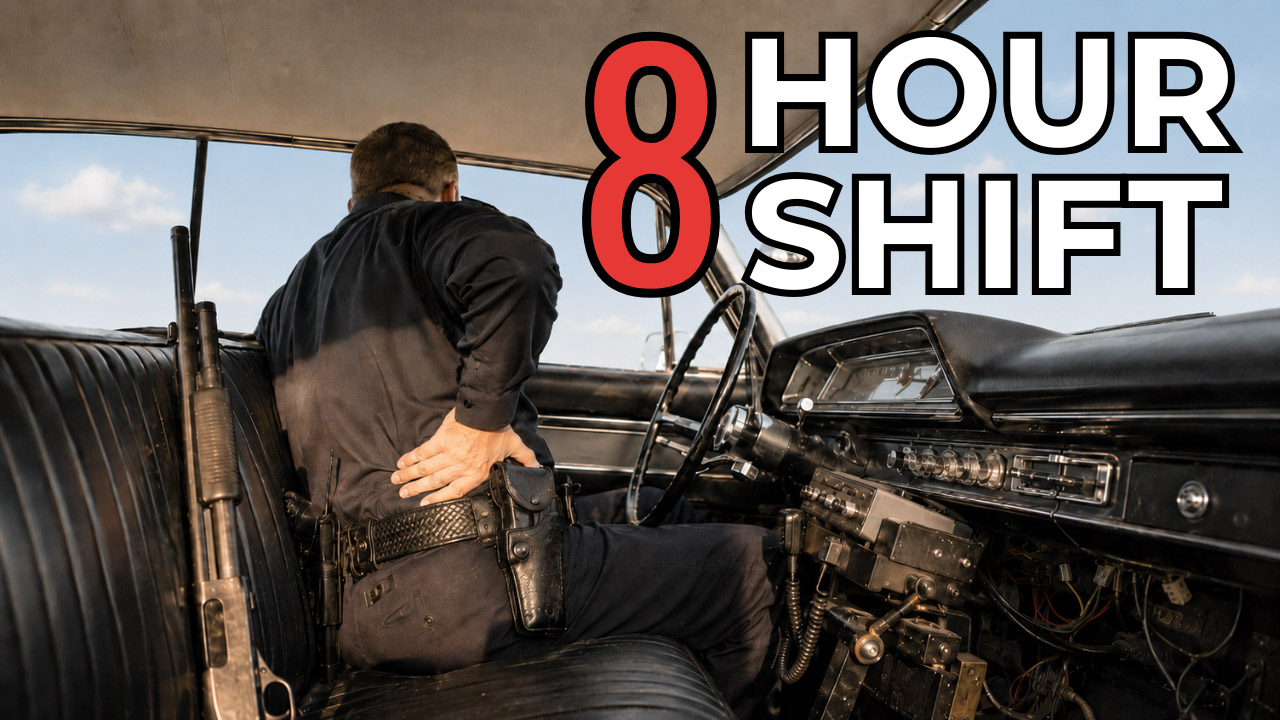
There was a second reason Chief Dan Mathews so often ordered another officer to take the wheel. Broderick Crawford, the man who closed episodes with a stern public-safety lecture, had a serious drinking problem that resulted in repeated stops and arrests for driving under the influence and, eventually, a suspended licence. The real California Highway Patrol knew him, with considerable embarrassment, as “Old 502,” 502 being the CHP’s own radio code for drunk driving.
-
The advisor with a second job
The show’s CHP technical advisor, Officer Frank Runyon, was given an unofficial assignment. In his own words: he was told to keep Crawford away from a bottle, believed the actor’s licence was suspended, and confirmed that some scenes had to be shot on private roads so Crawford could legally be filmed driving. According to the show’s creator, dialogue had to be captured by noon or it would not get done at all, and Crawford would bribe crew members to bring booze onto the set.
6. Why It Mattered
Put the two problems together and you get a strange picture of what Highway Patrol actually was: a show about the California Highway Patrol that the California Highway Patrol disowned, starring a man the agency privately called “Old 502” as its incorruptible chief, filmed in fake police cars because the real ones had been taken away.
None of it hurt the show. Highway Patrol was one of the most successful syndicated programmes in television history, distributed worldwide and dubbed into many languages, running in reruns for decades and sometimes retitled Ten-4. It launched or featured actors including Clint Eastwood, Leonard Nimoy, Robert Conrad and Barbara Eden. It sent real children into real police careers. The illusion proved more powerful than the reality it faked.
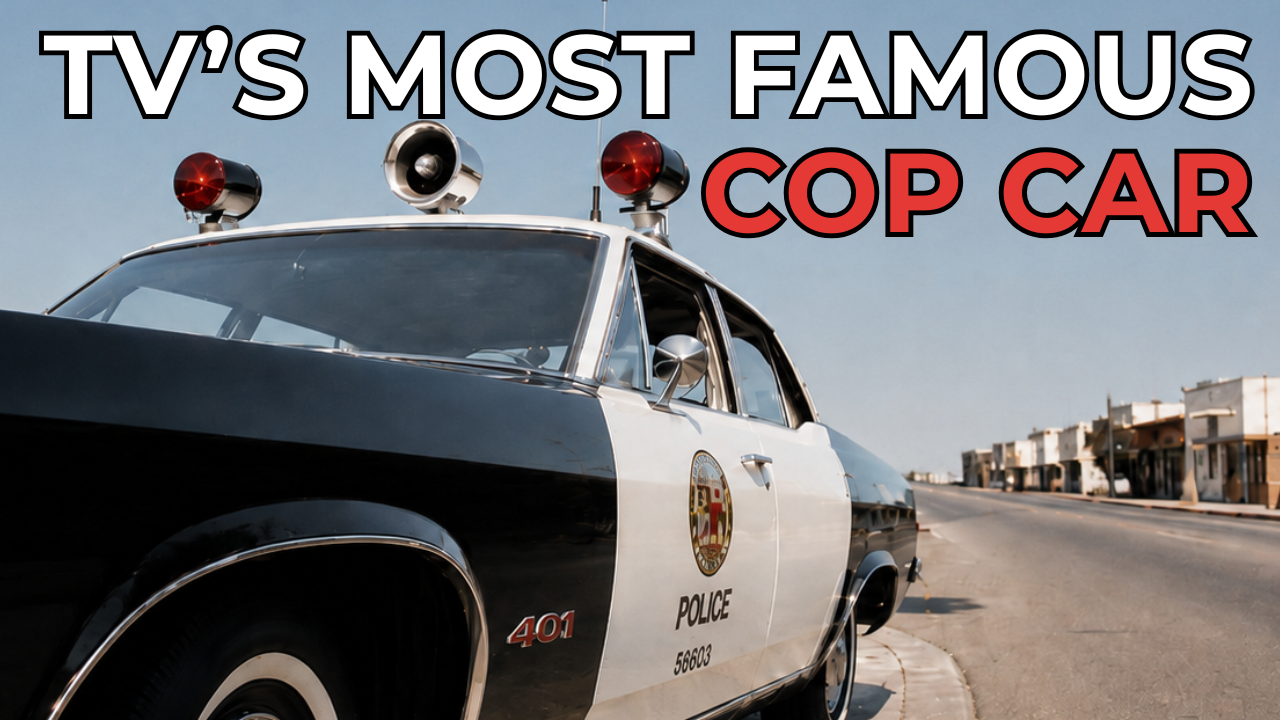
And there is the irony at the centre of it. The Buick that “only cops could buy” became famous not because of how many patrolled California’s highways, only a couple of hundred were ever built, but because a low-budget television show pointed a camera at it for a handful of episodes before losing access to it forever. The most famous police car in television history is famous for a role it barely played.
7. Key Takeaways
-
The CHP walked away in mid-1956 over differences about storylines and presentation, and took its cars with it.
-
Real CHP cars were filmed in disguise: generic logos over the door emblems, studio plates taped over exempt plates.
-
Count the Ventiports. Three means a cheap Special; four means Century, Super or Roadmaster. In 1958 Buick dropped them entirely.
-
The emergency substitute was a luxury hardtop, a 1956 Buick Super four-door Riviera standing in for a stripped two-door pursuit sedan.
-
From 1957 the show built its own fake police cars, and by 1958 they had drifted from reality again.
-
The star couldn’t legally drive. Crawford’s licence was suspended, and some driving scenes were shot on private roads.
8. Frequently Asked Questions
9. Sources
Every claim on this page is drawn from production records, first-hand interviews and marque documentation. These are the sources behind it.
-
Highway Patrol production records, Ziv Television Programs, 1955–1959
Episode and production history establishing the 3 October 1955 premiere, 156 episodes, the per-episode budget of $20,000 to $25,000 and the three-day shooting schedule.
-
Production trivia archives
Documentation of the mid-1956 CHP withdrawal, the substitute Buick Super hardtop, the 1957 replica squad cars and the trailer hitches used for the equipment trailers.
-
Officer Frank Runyon, CHP technical advisor
Runyon’s own quoted account of his role managing Broderick Crawford, including the licence suspension and the private-road filming.
-
Buick model records, 1955–1958
Ventiport counts by trim level across the period, the identification method used throughout this film.
-
Collector documentation, Buick Bugle, 1997
Enthusiast cataloguing of the specific cars used across the series run.
10. Related VIDEOs
By Badges & Chrome — researching the history of American police vehicles from published automotive history, period records, and primary sources. Every claim is verified before publication.
About the research →