
American Police Vehicle History · 1899–2026
The police cars
history almost forgot.
Researched documentaries, primary-source test data and reference guides on the machines that built American law enforcement — from the first motor patrol to the electric patrol car. Every claim sourced.
The Latest VIDEO
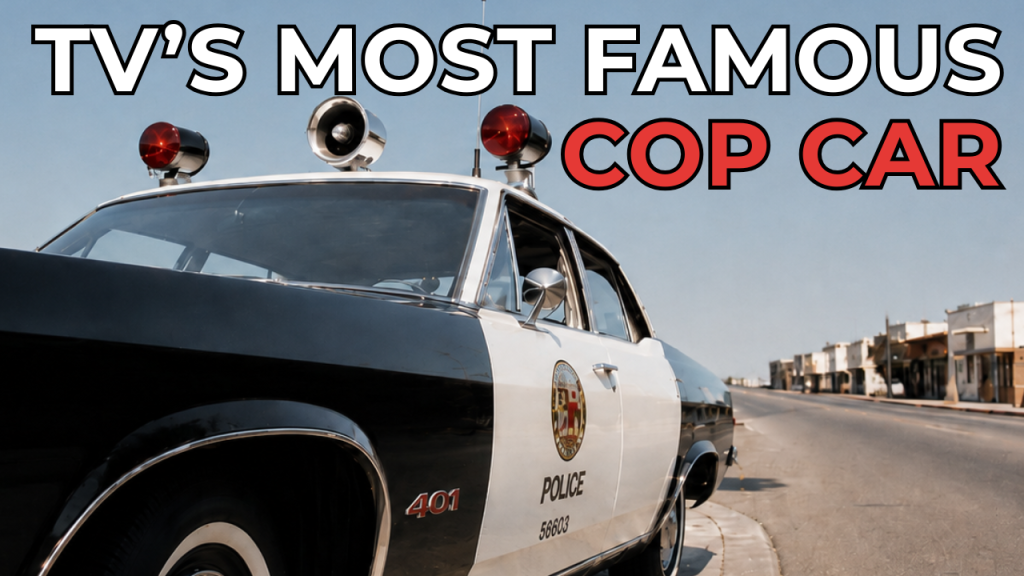
1950s · 20 min · California Highway Patrol
The AMC Matador: The Underdog Cop Car That Beat Ford and Dodge
The smallest, poorest automaker in America built a police car good enough to beat the giants.
In 1972 the LAPD tested the AMC Matador head to head against Plymouth and Dodge and chose the underdog, then put that car on national television as the face of the department. For a few years, the little guy won.

Researched
Every video, page and guide is built from published automotive history, period records and department archives — verified before release.

Sourced
Every page lists its references, and the test results are transcribed from the original federal reports. Where accounts conflict or a story is disputed, we say so.

Corrected
If we get something wrong, we fix it — and say what changed, in public.
The record
Every Michigan State Police vehicle test, 1980 to 2026
Once a year since 1976, the Michigan State Police have taken every police vehicle the manufacturers will submit and measured them against each other — acceleration to the hundredth of a second, twenty braking stops, thirty-two timed laps. It is the benchmark test in American policing, and the results decide what departments buy.
Thirty-six of those tests are here, transcribed from the original reports. Where a scan was damaged or a figure could not be recovered, the page says so instead of guessing.
From the research
What forty years of test books actually show
Some things only become visible when you read the same test in order, year after year — a measurement that quietly stopped measuring anything, a phrase the whole hobby uses that the department itself rejects.
How police car top speed stopped meaning anything
In 2016 a police Charger needed thirteen miles to reach 150 mph. A year later the same car reached 149 in a mile and a half. Nothing about it had changed.
“Pursuit rated” means nothing, and Michigan says so
The phrase is in almost every police car listing. The department everyone cites as proof states plainly that there is no such rating, and nobody with the authority to award it.
Sixteen feet: what anti-lock brakes were worth
In 1996 Ford brought a Crown Victoria without ABS to the Michigan tests, purely so it could be braked against an identical car that had it. Same model, same day, same surface.
The police car is the most familiar machine in American life and the least examined. Behind every black-and-white cruiser is a decision someone made — an engine chosen, a contract won, a law written, a company that lived or died by it. These machines carried the whole strange history of American law enforcement on four wheels, and almost none of it was written down. Badges & Chrome exists to write it down.
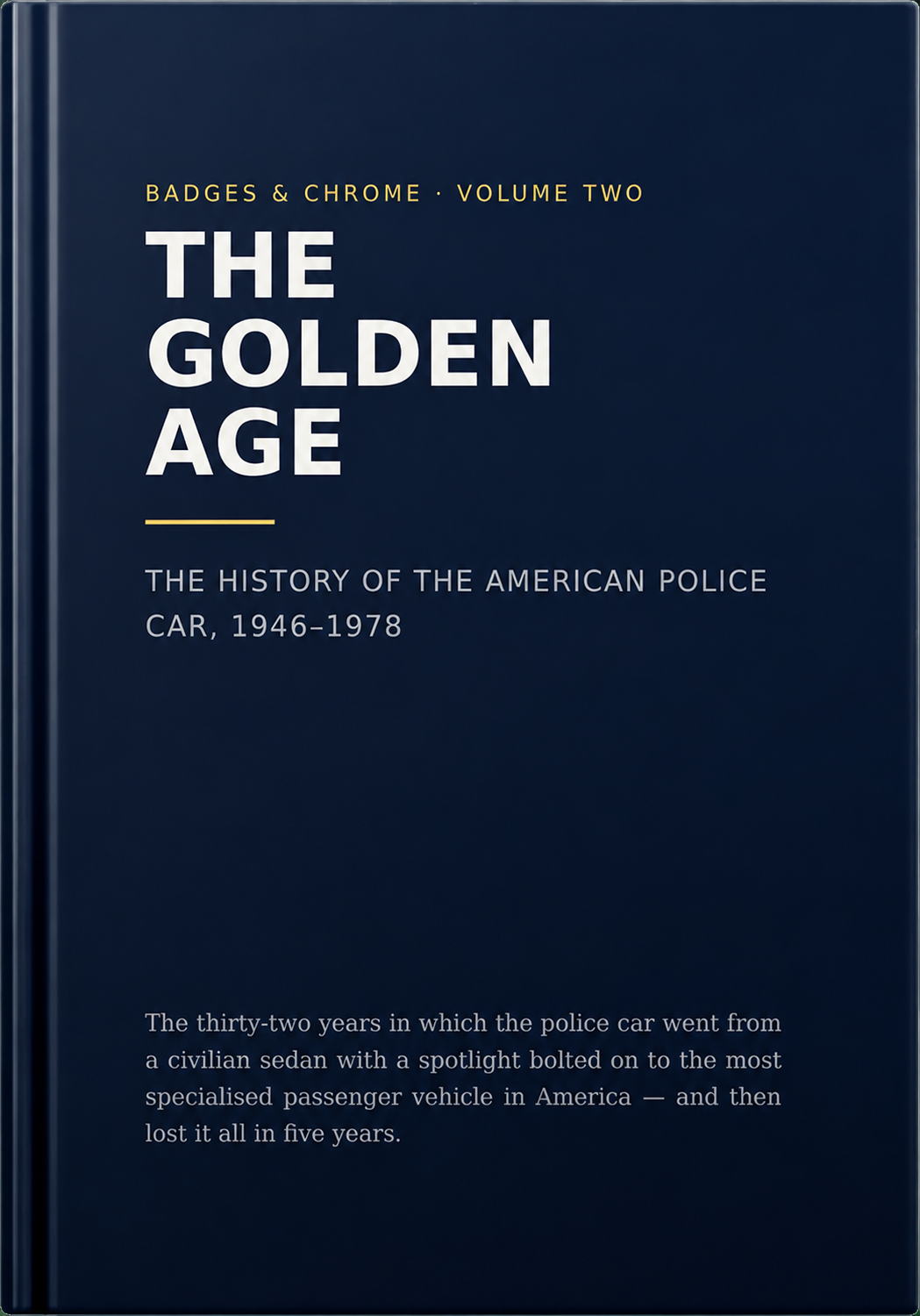
The ebook · Volume 2 of five
The Golden Age
The History of the American Police Car, 1946–1978
The videos give you eighteen minutes. This gives you the era, end to end — from the postwar car shortage that created the factory police package in 1950 to the emissions rules that killed it in 1978.
Sixteen chapters on how these cars were specified, bought, equipped and worked in. Every claim checked against two independent sources, hedged, or cut — and twenty-one things everyone else prints wrong, listed openly at the back.