
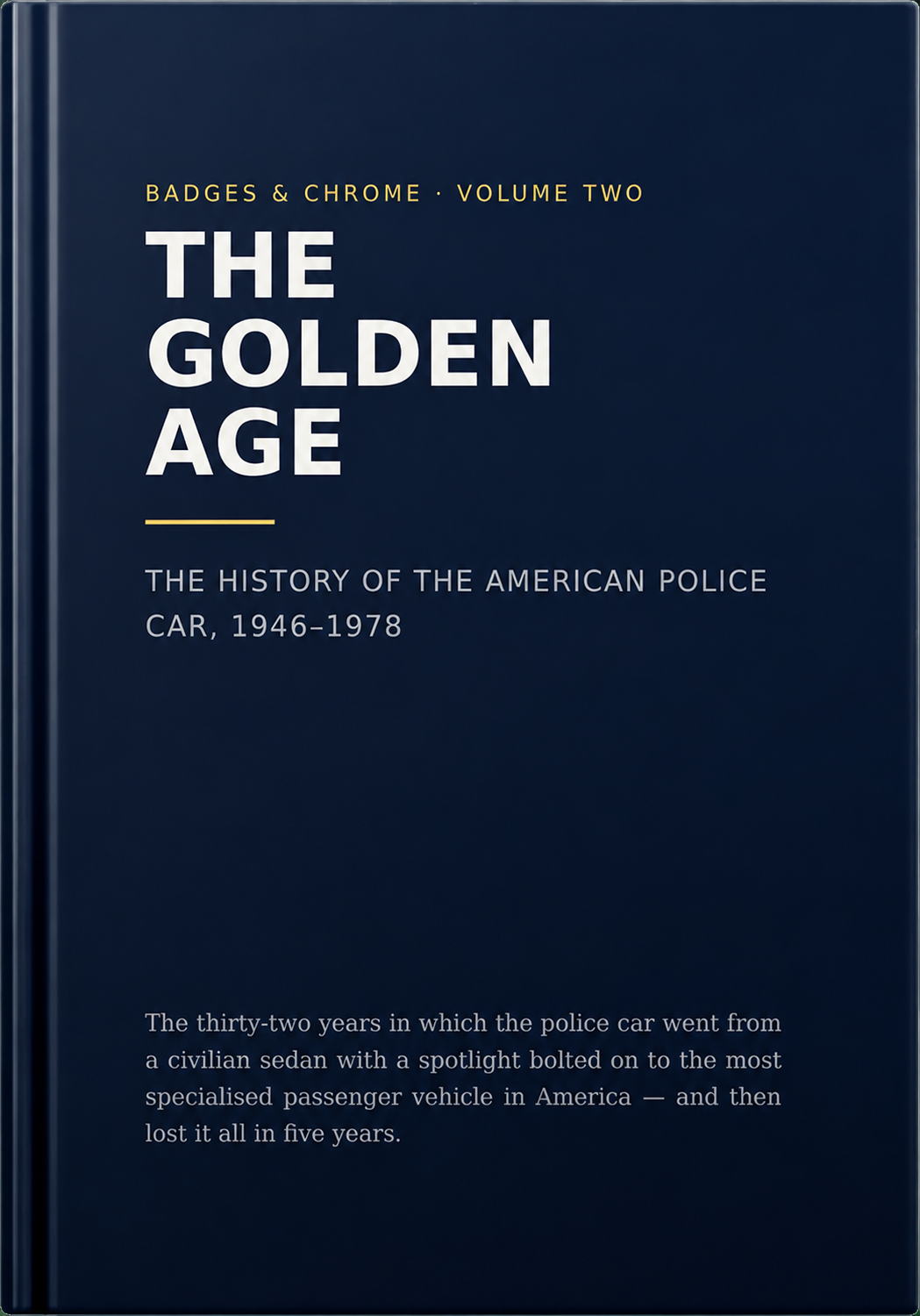
236 pages · 16 chapters
EPUB and PDF
Ebook · Badges & Chrome, Volume 2
The Golden Age: The History of the American Police Car, 1946–1978 is a 236-page ebook covering the thirty-two years in which the American police car became a purpose-built machine — and then stopped being one.
In 1969 a plain four-door Dodge Polara with a bench seat ran 147 miles an hour on Chrysler’s Chelsea proving ground. Nine years later, the best police car America could build took three seconds longer to reach sixty.
This book is the history of what happened in between, and of how it started — not with horsepower, but with a car shortage and a list of parts on a Ford order form.
What this ebook is
It is a history, not a picture book and not a repair manual. It explains what a factory police package actually contained, who decided what went into it, how departments bought these cars, and what it was like to sit in one for eight hours.
The subject is the American police car specifically: the Fords, Chevrolets, Plymouths, Dodges, Buicks, Hudsons, Oldsmobiles and AMCs that went to work wearing a badge. These were mechanically different from the cars in the showroom — different suspension, different cooling, different brakes, and in some years engines the public could not buy at all. Almost nothing written about American cars covers that side of it.
The police car was invented in 1950, and the invention was not an engine. Ford catalogued the first factory police package as an option code on an order form. Everything after that follows from paperwork: the 440s, the light bars, the black-and-white, the hundred and forty-seven miles an hour.
What’s inside — sixteen chapters in three acts
| 1 | The Postwar Problem | The postwar car shortage, and why not being able to buy a car mattered more than not being able to catch one |
| 2 | The Package Is Born | How Ford invented the factory police package in 1950 — an option code on an order form, not a new model |
| 3 | The Independents’ Last Stand | Hudson and Oldsmobile built faster, better-handling cars than Ford and lost the police business anyway |
| 4 | 1955 | The year the 200 hp ceiling broke, and the California Highway Patrol Buick that appeared in no dealer catalogue |
| 5 | Anatomy of a Police Package | What a police package actually contained: cooling, brakes, electrics, driveline, certified speedometer |
| 6 | The Chrysler Dynasty | How Chrysler took the police business with three brands and one catalogue — and what Ford and Chevrolet were doing meanwhile |
| 7 | Catching the Speeder | Traffic radar, from coffee cans on a Grumman runway in 1947 to the court cases that made speed provable |
| 8 | Beacon, Bar and Siren | Beacons, light bars and sirens: how the roofline everyone recognises came to look that way |
| 9 | The Officer’s Workplace | What eight hours inside a patrol car was actually like: bench seat, duty belt, shotgun rack, and no cage |
| 10 | Two Different Jobs | Why a state trooper and a city patrolman needed opposite cars, and how departments really bought them |
| 11 | 147 MPH | The 1969 Dodge Polara that ran 147 mph — and what that record actually was, examined properly |
| 12 | Black-and-White | Where the black-and-white livery came from, and why it was not William Parker who created it |
| 13 | Hollywood Makes the Cop Car | Highway Patrol, Dragnet and Adam-12 — and the police funeral the LAPD gave a civilian |
| 14 | Who the Car Was For | Vehicle assignment as a record of who was permitted to drive a patrol car, and who was not |
| 15 | The Underdog | The AMC Matador that beat Plymouth and Dodge for the LAPD fleet in 1972, on brakes and handling |
| 16 | The Fall | Emissions, two fuel crises, and the 1978 Plymouth Fury that was the last fast American police car |
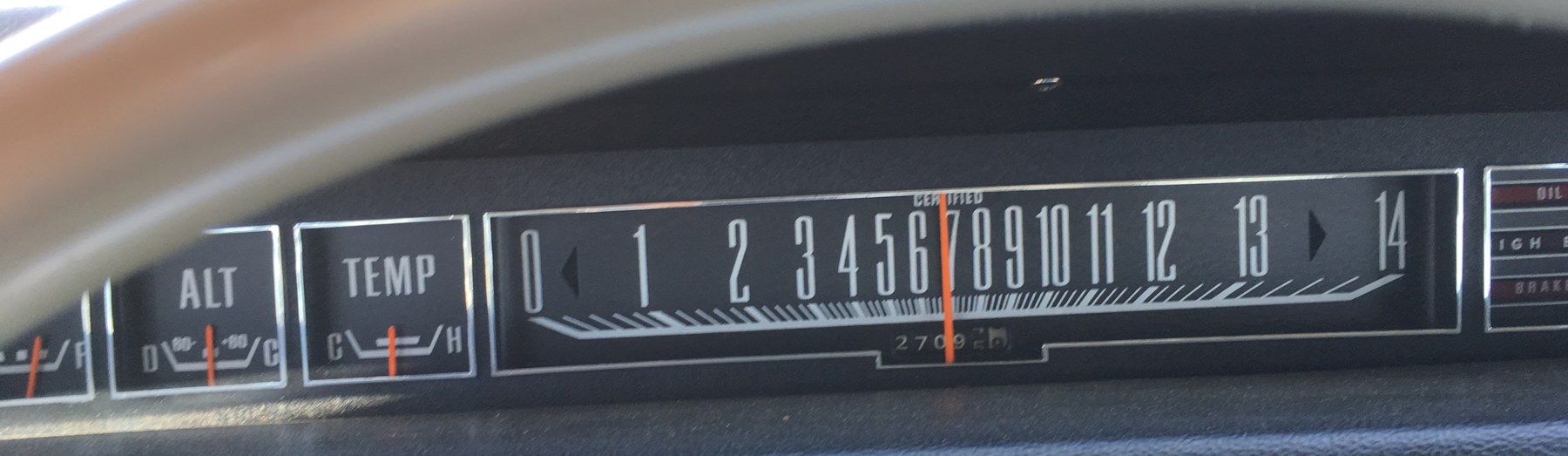
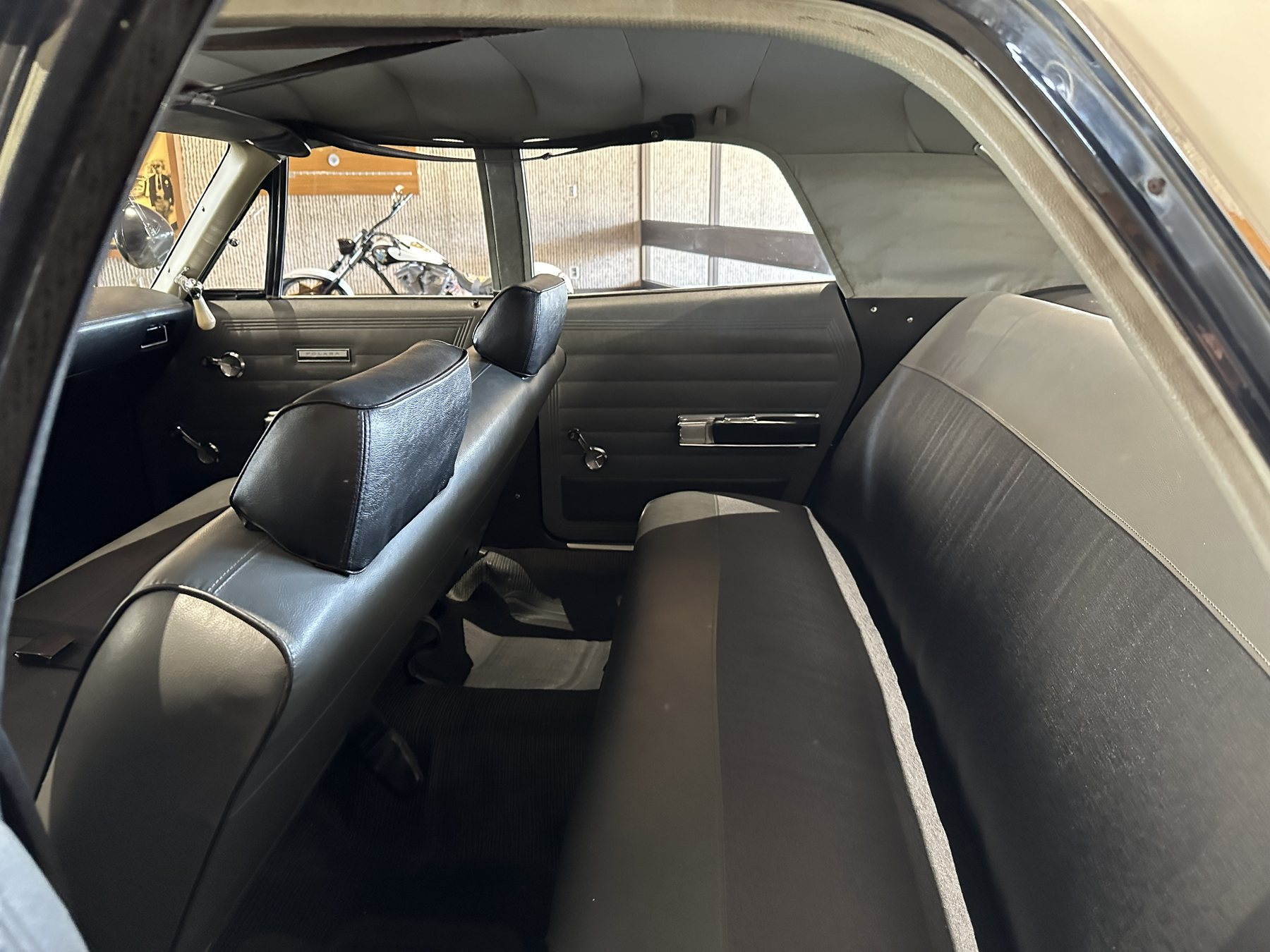
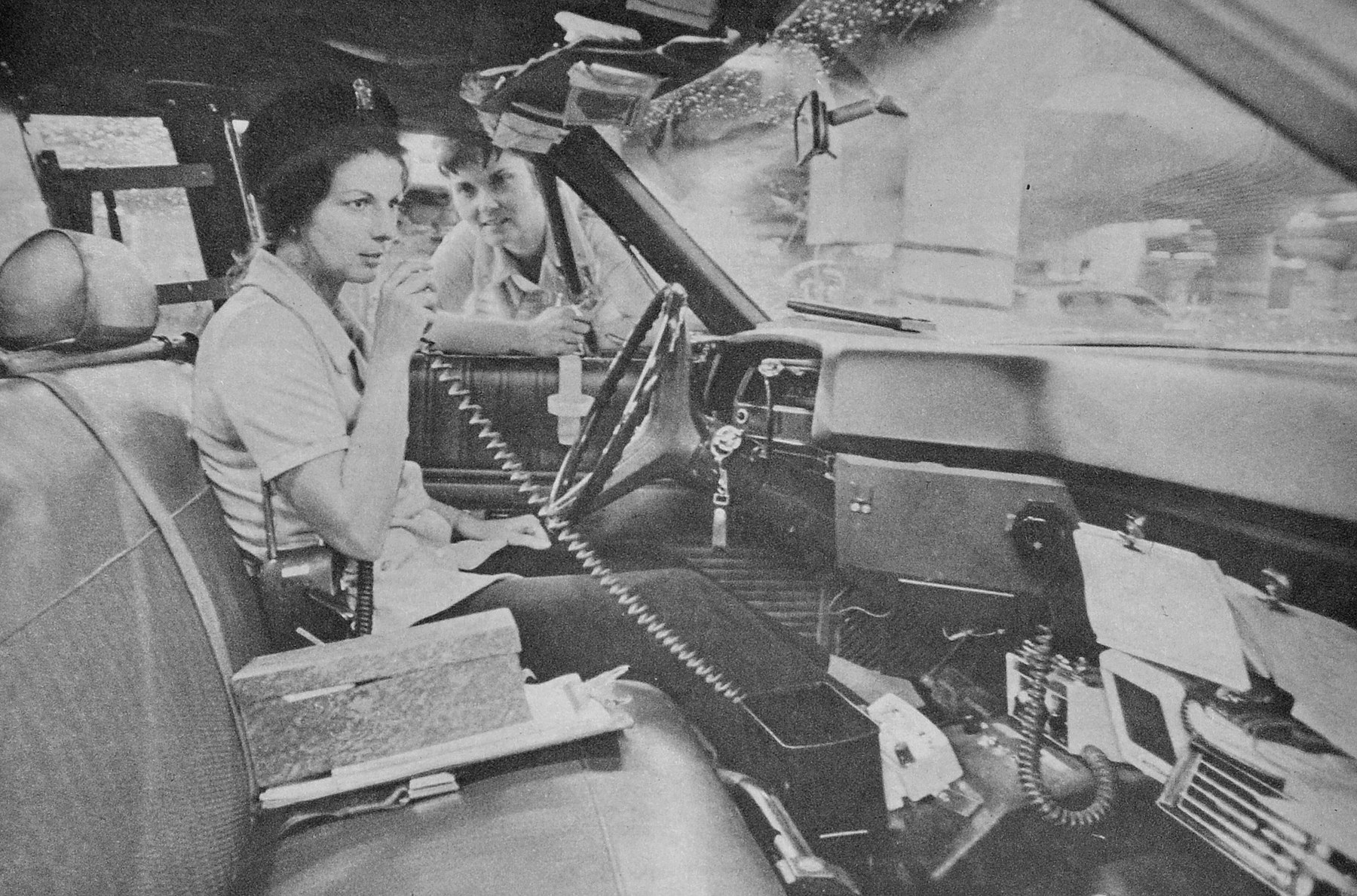
Three of the twenty-nine photographs. Each is credited to its owner in the book.
Plus a reference section: a service timeline from 1946 to 1979, a guide to buying and authenticating these cars, a consolidated bibliography, and the corrections list.
Twenty-one things everyone else prints wrong
Every specific claim in this ebook was checked against two independent sources, hedged in the text, or cut. That process found errors — including in work I had published myself. All twenty-one are listed at the end of the book rather than quietly amended. Three examples:
Most police-car writing repeats itself. One enthusiast site quotes another, a figure drifts, and thirty years later it is a fact nobody has checked. This ebook names where that happened and shows the working. Where sources genuinely disagree — and on some questions they do — it says so rather than picking the tidiest version.
What you will come away knowing
- How to tell a genuine police-package car from a repaint. Where the fender tag is, which option codes to look for, and why paint proves nothing at all.
- What was actually in a police package, system by system: cooling, brakes, electrics, driveline, and the certified speedometer that was a legal instrument.
- Why the police car was invented — not to win chases, but to survive an idle and solve a purchasing problem.
- How to date a photograph from the beacon, the light bar, the livery or the radio placement.
- What eight hours inside one was like: the bench seat, the duty belt, the shotgun rack, and the prisoner cage that did not exist until the 1960s.
- Which received facts are wrong, and how it is known.
Who it is for
Enthusiasts, restorers, collectors and retired officers. The authentication material is written for owners; the rest is written for readers. It assumes you already know a fair amount — it does not explain what a V8 is.
A fair number of copies are bought by sons and daughters as a gift for someone who drove one.
Who it is not for
Three groups, and I would rather say so than take the sale. It is entirely American — nothing on European or Japanese police vehicles. It stops in 1978, so if your interest is the Crown Victoria or the modern Charger, that is Volumes 3 and 4, still in preparation. And it is a history rather than a repair manual: it will tell you what a police package contained and how to tell whether a car has one, but not how to rebuild it.
Where this sits in the series
Five volumes cover the American police vehicle from 1899 to the present. Each stands on its own and they can be read in any order.
| I | Horses to Horsepower · 1899–1945 — the police could not catch anyone, and it took forty years to fix that |
| II | The Golden Age · 1946–1978 — this volume |
| III | Downsized · 1979–2000 — rock bottom, the Mustang, and the long reign of the Crown Victoria |
| IV | The Last American Sedan · 2001–present — the Charger, the SUV takeover, and the end of the patrol sedan |
| V | The Field Guide · all eras — the reference volume |
Volume 2 is available now. The others are in preparation, and buying this one does not commit you to anything.
Why this book exists
I did not set out to write a book. I set out to answer a question that would not leave me alone: why did the police car become its own kind of machine, and then stop being one?
The answer turned out to be more interesting than the question. Almost nobody wrote this down at the time. These were tools — a department bought a car, worked it until it failed, and sold what was left to a taxi company or a wrecking yard. Nobody photographed the inside. Nobody asked the men who drove them what it was like.
Since starting, restorers, collectors and retired officers have written to me, and several have told me I was wrong about something. Two of those corrections are in this volume, credited by name. Those are the best emails I get. If you find something here that is wrong, tell me — it gets fixed, the change is recorded, and every reader receives the corrected edition free.
One payment, both formats, and every future edition of this volume free.
Buy the ebook — $24.95Questions
Is this a printed book?
No. It is an ebook — a digital download in EPUB and PDF. The PDF is print-quality, so you can print it at home or at a print shop if you would rather hold it.
How is it delivered?
By email, within about a minute of purchase, through Gumroad. Card and PayPal accepted, and your payment details never touch this site.
What device do I need?
Any. Phone, tablet, e-reader or computer. EPUB suits e-readers and phones; the PDF preserves the page layout exactly.
How long is it?
236 pages, 16 chapters, around 42,000 words, with 29 photographs and seven data charts.
What years does it cover?
1946 to 1978, from the postwar car shortage to the last fast American police car. Earlier and later eras are covered by other volumes in the series.
Do I need Volume 1 first?
No. Each volume stands on its own and they can be read in any order.
Will I get future editions?
Yes, free. Corrections are published rather than quietly made, and every buyer receives every later edition of this volume at no cost.
What if I find a mistake?
Tell me. It gets fixed, the change is recorded in the version history, and you get the corrected edition free. If you would like to be credited, you will be.