
A Record That Stood For 37 Years
The Fastest Police Car Ever Built: The 1969 Dodge Polara
By Badges & Chrome · researched and verified from period records and primary sources · About the research →
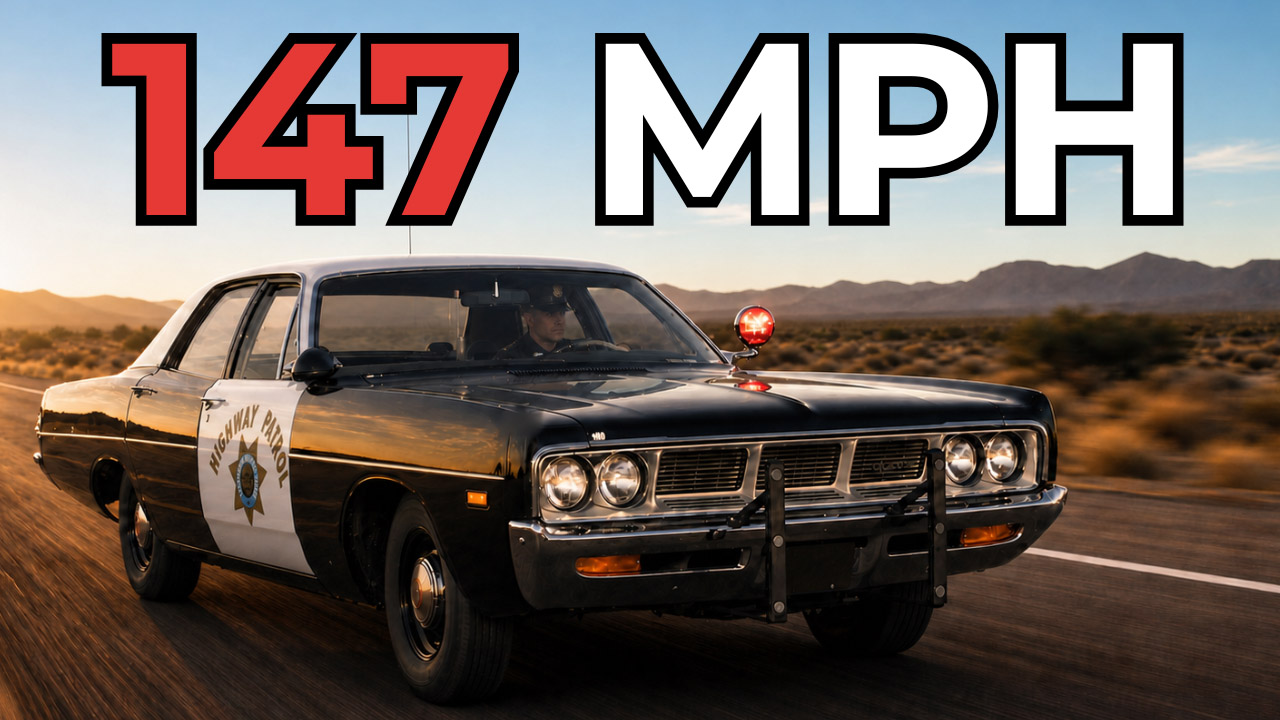
About this VIDEO
-
For thirty-seven years, no police car was recorded going faster than one heavy Dodge sedan from 1969.
The story of the 1969 Dodge Polara Pursuit, the brutal California Highway Patrol specification it was built to survive, and the three forces that made American police cars slower for the next four decades.
-
Era
1968–2006
-
Departments
California Highway Patrol, Michigan State Police
-
Runtime
17:10
-
Published
Aug 2, 2026
1. Introduction
-
Why could only police buy the 1955 Buick Century Model 68?
The highest speed ever recorded for an American police sedan of the classic era belongs to the 1969 Dodge Polara Pursuit. At Chrysler’s Chelsea Proving Grounds in Michigan, the full-size four-door, powered by the 440 cubic inch Magnum V8 producing 375 horsepower and close to 480 pound-feet of torque, recorded a top speed of 147 miles per hour, with some accounts placing it just under 150. It reached sixty miles per hour in roughly six and a half seconds and ran the quarter mile in the low fourteens, genuine muscle-car figures in a two-ton car built to carry two officers and a prisoner.
That figure stood unbeaten for thirty-seven years. It is worth being precise about what it is: a result recorded at Chrysler’s own proving ground, not a placing in a comparative national test. There was no governing body adjudicating police car speed records. What there was, was a number nobody could beat. It survived the collapse of the muscle-car era, two fuel crises, the malaise years and the entire 1990s before a police car officially went faster. And when the record finally fell in 2006, it fell to another Dodge.
2. What You Will Learn
-
What the California Highway Patrol’s 1968 pursuit specification actually demanded, and why most cars could not meet it.
-
Why the Polara won chases in the midrange rather than off the line, and what officers who drove them remember about that.
-
The three forces that strangled the American police car through the 1970s, and what they did to the 440 in just three years.
-
How the CHP’s search for a replacement led somewhere nobody expected, and why the obvious answer was rejected after an eighteen-month trial.
-
Why a popular claim about a 1990s Chevrolet beating the record does not survive independent testing.
-
What finally broke the record in 2006, and the symmetry in which car did it.
3. Historical Background
By the late 1960s, selling a police car to the California Highway Patrol meant passing a test rather than sending a brochure. The agency patrolled the fastest highways in America and needed machines that could run flat out all day in desert heat and still stop cleanly at the end of it. Its 1968 pursuit specification read less like a fleet order than a dare.
The Polara that met it was, on paper, nobody’s idea of a legend: Dodge’s big, sensible, full-size fleet sedan, wearing Chrysler’s new slab-sided “fuselage” styling for 1969. It was heavy, well over two tons. What made it extraordinary was the engine, and the fact that a car this ordinary-looking could carry it.
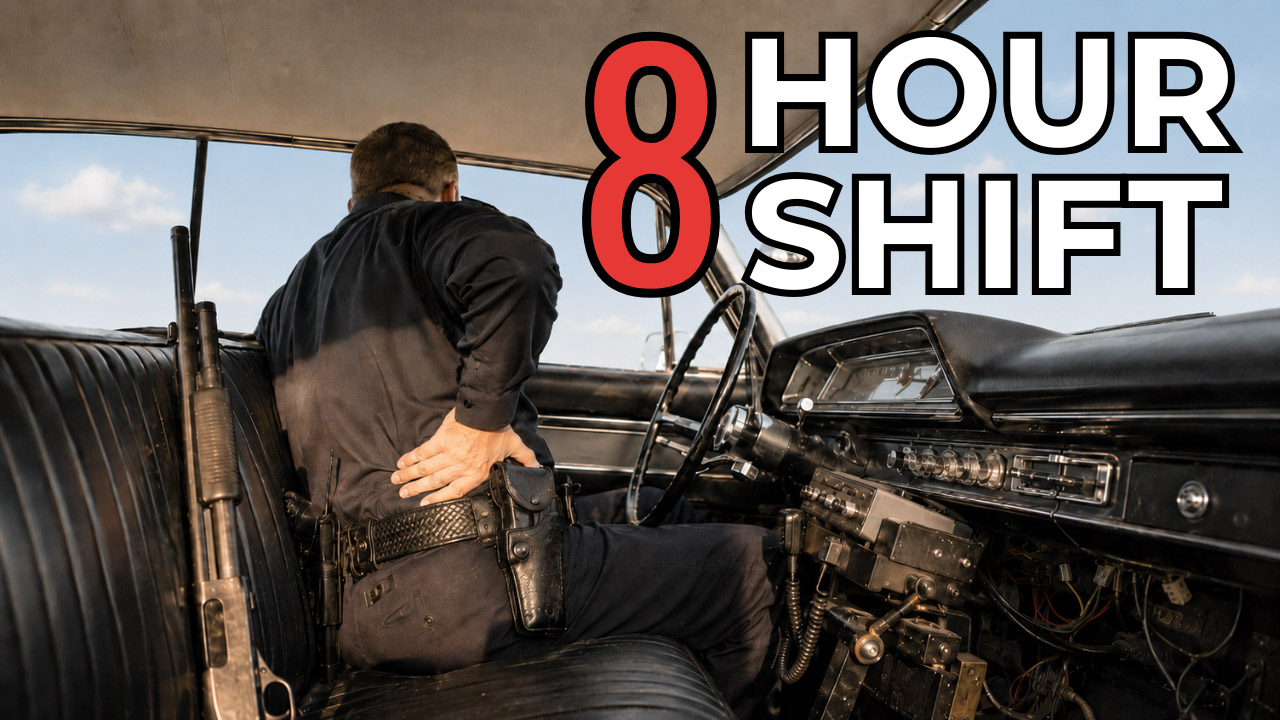
The CHP and the LAPD were important enough customers that Chrysler built specific parts for them; the CHP even specified its own camshaft grind. There is a detail that captures the era exactly: to save money, the CHP ordered many of its Polaras without power steering, so an officer muscling that big nose through a mountain corner at speed was getting a serious workout in the fastest police car in America.
4. The Machine Explained
The Polara was never beaten by a rival. It was slowly choked by regulation and economics, and the same engine block tells the whole story: nearly a hundred horsepower gone in three years. What the California Highway Patrol demanded in 1968 was a car that could run flat out all day and then stop cleanly, and the specification was written to make that impossible to fake.
-
CHP spec: minimum displacement
420 cu in. No small blocks.
-
CHP spec: fuel and induction
Knock-free running on 100-octane, through a single carburettor.
-
CHP spec: acceleration
115 mph by the end of one mile from a standing start; 125 mph by the end of two.
-
CHP spec: brakes
Four hard stops from 90 mph to zero at two-minute intervals, then a panic stop from 60, without fade or drag.
-
Engine
440 cu in Magnum V8.
-
Output
375 hp and approximately 480 lb-ft of torque.
-
Transmission
Three-speed TorqueFlite automatic with highway gearing.
-
Top speed
147 mph at Chelsea Proving Grounds.
-
0–60 mph
Approximately 6.5 seconds.
-
Quarter mile
Low 14s.
-
Body
Full-size unibody four-door, over two tons.
5. What The Records Show
The Michigan State Police annual evaluation is the standard against which American police cars are measured, and it is where this story’s key numbers come from. Read across the decades and the same engine, and the same category, tell a story of steady decline followed by a long climb back.
-
How the 440 was strangled
In 1969 the 440 made 375 horsepower and the car ran 147 mph. In 1970 compression was reduced for emissions and top speed fell to around 141. By 1971 the rating had slid to 370 horsepower, and in 1972 compression was cut further and output collapsed to 285. Nearly a hundred horsepower gone in three years, from the same block.
-
1978: how far it had fallen
The 1978 Plymouth Fury with the 440 managed approximately 133 mph, and it was the fastest police car in America that model year. The best police car in the country was fourteen miles an hour slower than a Polara had been nine years earlier. After 1978 the big block was finished, and the largest engine available in a police car dropped from the 440 to a 351 or 360.
-
The claim that does not survive testing
There is a persistent claim that a 1990s Chevrolet Caprice broke the Polara’s record. Chevrolet said as much, based on testing at its own proving grounds. Independent Michigan State Police testing did not support it. The Caprice was an outstanding police car and won its year outright, but it did not beat the Polara’s top-speed number.
-
2006: a Dodge breaks a Dodge
The record held until 2006, when a Hemi-powered Dodge Charger Pursuit ran 150 mph in Michigan State Police testing. The crown a Polara took in 1969 passed to a car wearing the same ram’s-head badge nearly four decades later.
6. Why It Mattered
For nearly forty years, through fuel injection, aerodynamics, and every advance in engineering that followed, American manufacturers could not build a four-door police car that beat the top speed of one heavy Dodge sedan from 1969. The big-block era was not merely a high point for the police car. For outright speed it was the high point, and everything after it was the industry slowly clawing back toward a number Chrysler had already reached before the first man walked on the moon.
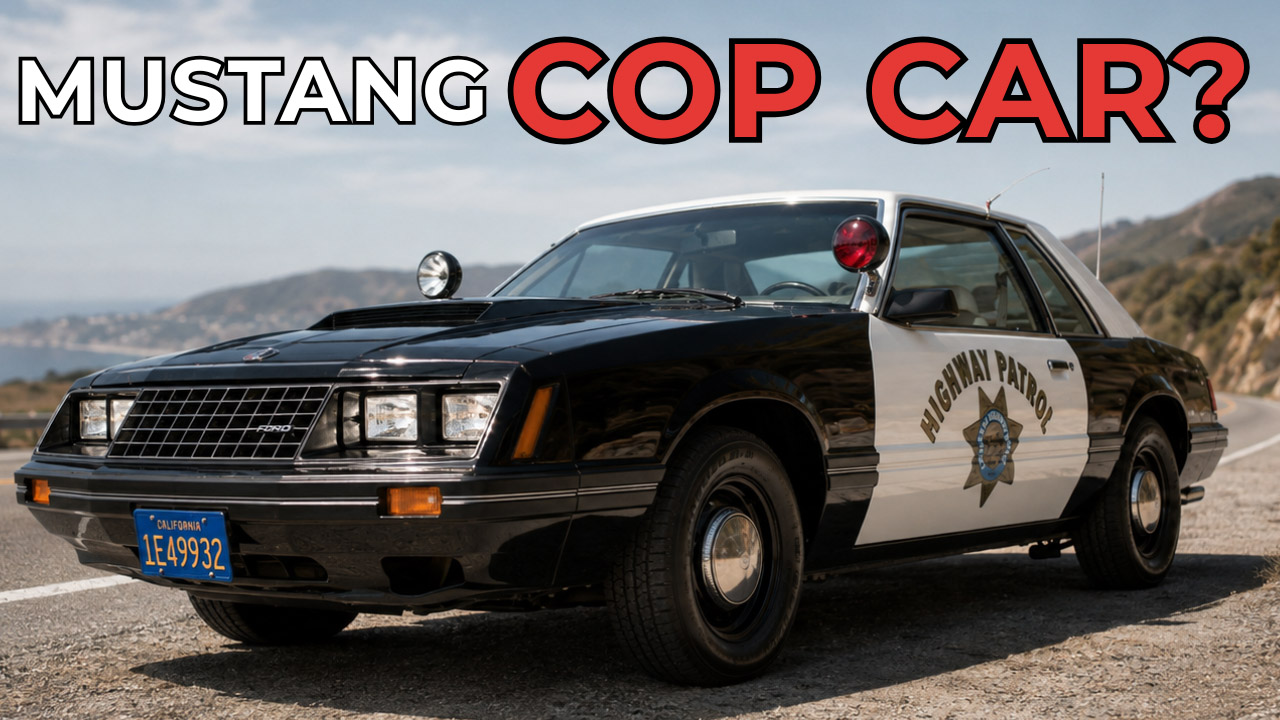
That gap had consequences on the road. By the end of the 1970s, criminals in ordinary sports cars could simply point the nose down the highway and drive away from the police, which is what eventually drove the California Highway Patrol to abandon the big sedan altogether and look for something small, light and fast. The film follows that search, the surprising car it rejected, and the even more surprising one it chose.
The fastest cop car ever built was not the newest or the most sophisticated. It was a heavy, plain-faced four-door, a brief flash of the muscle-car era frozen into a police fleet specification, and it outran everything that came after it for the better part of forty years.
7. Key Takeaways
-
147 miles per hour, 1969. The Dodge Polara Pursuit’s top speed at Chelsea Proving Grounds, in a two-ton four-door with rear drum brakes.
-
Thirty-seven years. How long the record stood before a police car officially went faster.
-
A Dodge broke a Dodge. The 2006 Charger Pursuit, with a Hemi V8, ran 150 mph in Michigan State Police testing.
-
The CHP specification was brutal: 420 cubic inches minimum, 100-octane knock-free running, and a punishing repeated-braking test.
-
The 440 lost nearly 100 horsepower in three years to emissions-driven compression cuts.
-
1978 was the floor. The fastest police car in America that year managed around 133 mph.
8. Frequently Asked Questions
9. Sources
Every claim on this page is drawn from institutional test data, purchasing specifications and marque documentation. These are the sources behind it.
-
Michigan State Police annual vehicle evaluation
Patrol vehicle test data across the decades, the standard reference against which American police car performance is measured.
-
Chrysler Chelsea Proving Grounds testing records, 1969
The source of the Polara’s 147 mph top-speed figure.
-
California Highway Patrol pursuit vehicle purchasing specification, 1968
The document setting the 420 cubic inch minimum, the 100-octane single-carburettor requirement, the acceleration standards and the repeated-braking test.
-
Edwin J. Sanow, police vehicle histories
The standard reference series for Michigan State Police test data and factory police packages.
-
Allpar and the Mopar fleet-history community
Police package option codes, engine specifications and surviving documentation for Chrysler’s pursuit cars.
10. Related VIDEOs
By Badges & Chrome — researching the history of American police vehicles from published automotive history, period records, and primary sources. Every claim is verified before publication.
About the research →