
The Officers Called Them Dog Cars
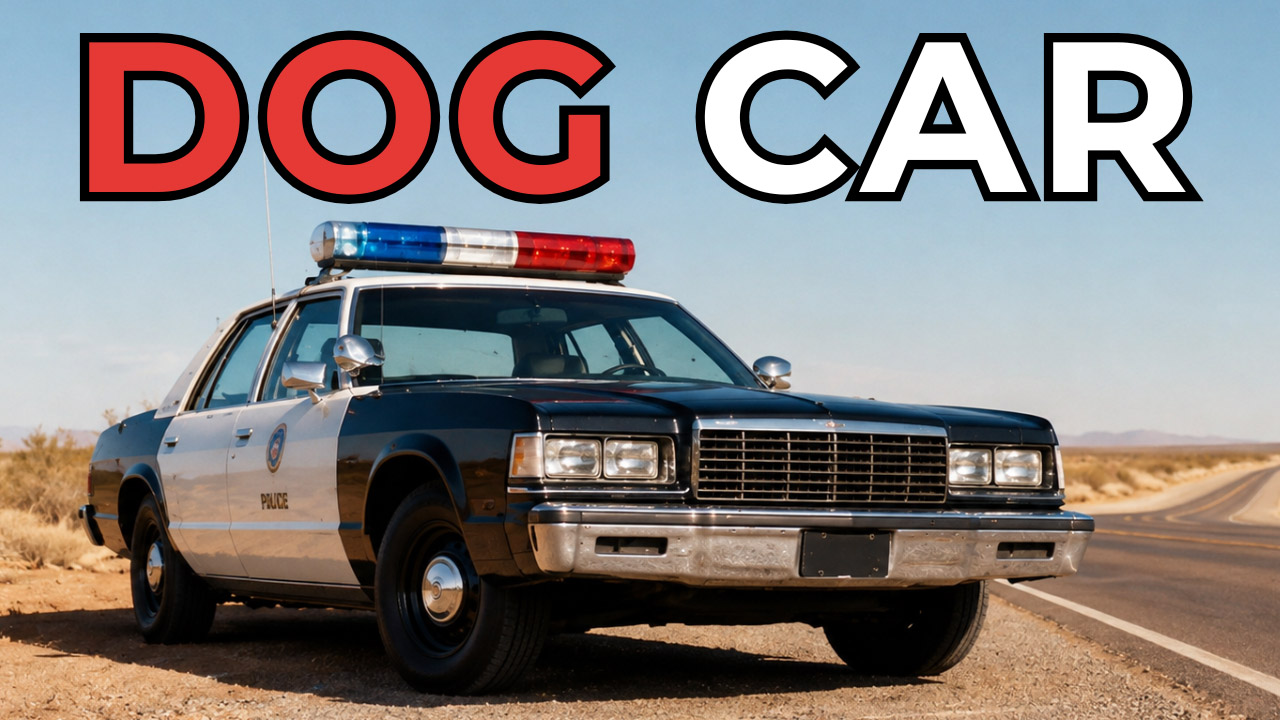
The Dodge St. Regis: The Slowest Police Car Ever Built
By Badges & Chrome · researched and verified from period records and primary sources · About the research →
About this VIDEO
-
Eleven years after building the fastest police car in American history, the same company handed the CHP a car that couldn’t crack ninety.
How Chrysler’s police dynasty hit rock bottom in 1980, and why that humiliation triggered one of the great comebacks in pursuit-car history. Rock bottom created the rebound.
-
Era
1979–1982
-
Department
California Highway Patrol
-
Runtime
17:23
-
Published
Aug 14, 2026
1. Introduction
-
Why could only police buy the 1955 Buick Century Model 68?
The 1980 California-specification Dodge St. Regis has the strongest claim. California’s own air-quality rules disallowed the good engine for the 1980 model year: the 360 cubic inch V8 that had made the 1979 car respectable was no longer certified for sale in the state, leaving the four-barrel 318 producing just 155 horsepower as the hottest engine the California Highway Patrol could order, in a full-size sedan weighing around four thousand pounds.
Chrysler had also dropped the performance rear-axle ratio that year in favour of a single tall fuel-saving ratio. The result was a top speed of 85 miles per hour on flat ground, falling to around 65 uphill. The CHP bought roughly 900 of them at a little over $7,000 each, and the officers who drove them gave them a name soaked in contempt: the dog cars.
2. What You Will Learn
-
How completely Chrysler had dominated American police work before this, and on what quality.
-
Why the 1979 St. Regis was actually a decent police car, and what single change ruined it.
-
The detail on the specification sheets that proves Chrysler knew exactly what it had built.
-
The government document that let the CHP legally modify its brand-new police cars.
-
What happened at the state oversight hearing, and the eighty-six cars that never went on patrol.
-
Why the worst police car of its era produced the car that rescued the whole category.
3. Historical Background
For most of the 1960s and into the 1970s, a state trooper or highway patrolman was very likely behind the wheel of a Chrysler product. By the late 1960s the company had built a position in American police fleets that no rival came close to matching. The exact share is disputed and the widely quoted eighty-five percent does not survive verification, but the direction is not in doubt: for two decades, buying a police car in America usually meant buying a Chrysler product. It had earned that on speed: this was the era of the big-block V8, the 383 and the mighty 440, and the crown jewel was the 1969 Dodge Polara ordered by the CHP, which ran 147 miles per hour.
Then the ground shifted. Tightening federal emissions regulations choked the big engines year after year. Two fuel crises, in 1973 and 1979, made enormous V8s look like liabilities. Relentless downsizing pressure pushed every car smaller and lighter. For a company whose identity was built on big engines this was existential, and Chrysler itself was staring down bankruptcy, surviving only on a controversial federal loan guarantee in 1980.
The St. Regis was Chrysler’s downsized replacement for the full-size Dodge Monaco, riding on a new smaller platform called the R-body. It became one of the shortest-lived Dodge nameplates in history, lasting just three model years, and it was born into a company leaning desperately on fleet sales: a remarkably high share of production, nearly a third, was built for police and law enforcement use.
4. The Machine Explained
The disaster was not there at the start. Equipped with the 360 V8 and the police package, the 1979 St. Regis made respectable power, and officers who drove those early cars reported it accelerated well and was no slouch in real patrol work. The catastrophe came from a single change, in a single state, for a single model year.
-
Model
1980 Dodge St. Regis, California police specification.
-
Engine
318 cu in V8, four-barrel.
-
Output
155 hp.
-
Why not the 360?
California’s stricter air-quality rules disallowed it for 1980.
-
Rear axle
Performance ratio deleted; a single tall fuel-saving ratio fitted.
-
Weight
Around 4,000 lb.
-
Top speed
85 mph on flat ground; roughly 65 mph uphill.
-
Purchased
Around 900 by the CHP, at a little over $7,000 each.
-
Platform
The R-body, one of the shortest-lived Dodge platforms in history at three model years.
-
Share built for police
Nearly a third of all St. Regis production.
5. What The Records Show
The most remarkable evidence is not a magazine review or an officer’s memory. It is a government document. As the crisis unfolded across 1980 and into 1981, the CHP went to California’s own Air Resources Board and obtained a special exemption, an executive order permitting the patrol to modify its brand-new police cars specifically to claw back some speed.
-
Three permitted modifications
The order allowed the CHP to remove the muffler and replace it with a straight pipe, to change the rear axle to a much lower and more aggressive ratio, and to install a transmission programming kit. The state of California had to write a formal legal exemption from its own emissions laws so its police cars could be fast enough to function.
-
The detail that says Chrysler knew
When the company printed the specification sheets for these police cars, the documents listing every performance figure a fleet manager would want, the acceleration numbers and top-speed figures were simply omitted. A company that had once bragged about 147 miles per hour now declined to print how fast its police car would go.
-
The speedometer coincidence
For the 1980 model year the federal government capped speedometers on nearly every American car at 85 mph, a fuel-crisis measure. Every car got one. But on the dog car that 85 mph speedometer happened to match the car’s actual top speed almost exactly: the one car in America that could genuinely bury its own needle.
-
Eighty-six cars sold at cost
In October 1980 the matter went before California’s Little Hoover Commission, a state oversight body, and the CHP moved to get the St. Regis out of its fleet as fast as possible. It sold off eighty-six of the cars, and some of those had never entered service at all: brand-new police cars, bought with taxpayer money, sold at the same price the state had paid, without ever going on patrol.
-
“Big block withdrawal”
Chuck Swift, the Sacramento Dodge dealer who had held the CHP supply contract for years, summed up the mood with a phrase that has stuck. The officers, he said, were suffering from big block withdrawal. These were men who a few years earlier had patrolled California in Polaras that would do 147 miles per hour.
-
Being fair to the car
Here is a detail that complicates the joke. Even in its detuned, California-choked form, that four-barrel 318 St. Regis still out-ran the 1980 Chevrolet Impala in Michigan State Police testing. It was not the worst car on the road in any absolute sense. Its real failing was being catastrophically slow for California pursuit work, measured against the 147 mph standard the CHP had grown used to.
6. Why It Mattered
The St. Regis dragged its family down with it. The whole R-body line was nearly cancelled after 1980 and survived one more year only because police and fleet customers protested loudly enough to earn a reprieve. Then it was gone, dropped mid-way through 1981. Dodge retreated to the smaller Diplomat as its largest sedan, and the full-size Dodge, the big, roomy patrol car that had defined the brand for decades, effectively disappeared from police work until 1990.
But the failure left a vacuum, and the crisis was clearest in California, where the dog car had failed most spectacularly. The CHP needed a fast pursuit car and Detroit’s emissions-choked, downsized sedans could not provide one. So the patrol went looking for something completely different, and by the accounts of the people who tell this history, the humiliation of the St. Regis is exactly what set that search in motion.
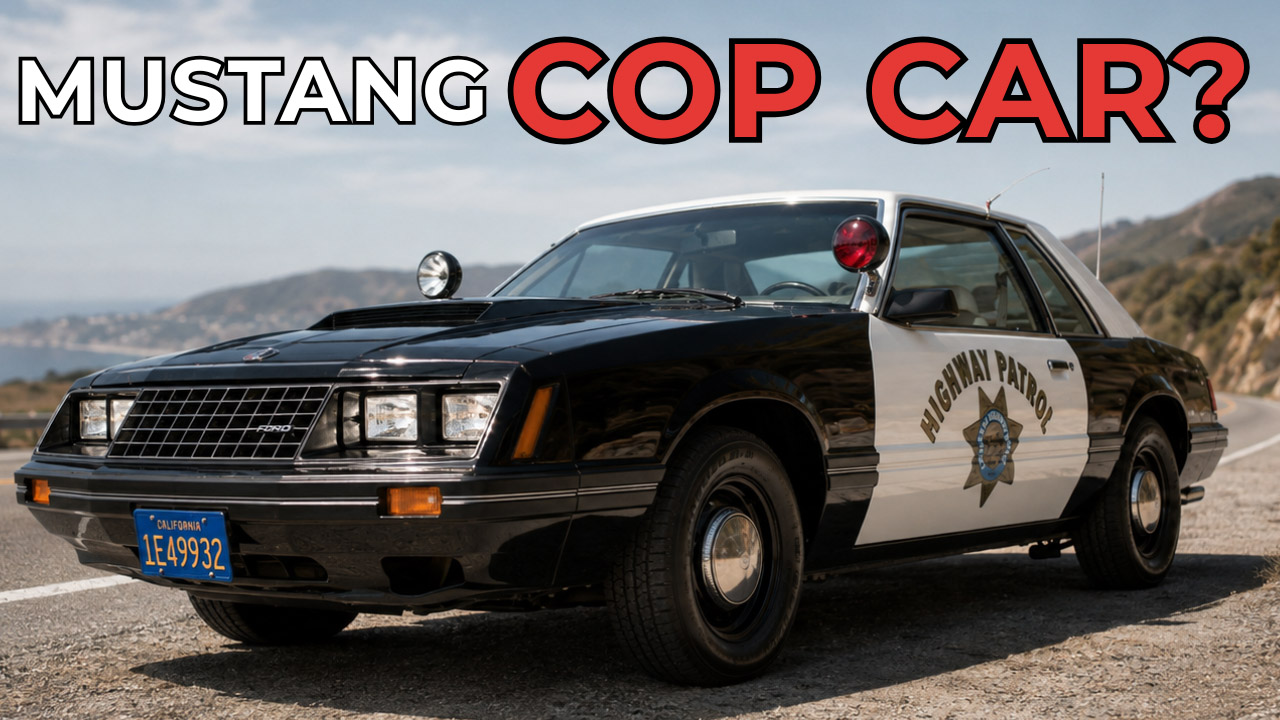
The rescue came from Ford, in the unlikely shape of a Mustang. In 1982 Ford introduced the Mustang Special Service Package, throwing out the entire logic of the big sedan: a lightweight two-door Fox-body coupe with a five-litre V8, engineered for pursuit, reinforced for high-speed duty, built to idle for hours and then launch hard. After years of dog cars, American police finally had a genuinely fast pursuit car again.
That is the strange truth at the centre of this story. The slowest police car ever built did not fail quietly and get forgotten. Its failure was so complete, so public and so painful that it forced the police car to reinvent itself. The same California Highway Patrol that had run the fastest cop car in history, and then the slowest, became the agency that ushered in the next era of police speed.
There is one last irony. The car the CHP could not wait to dump found a second career on television, turning up in police livery across prime time through the early 1980s, and a great many of them met their end getting spectacularly wrecked on camera. The dog car was a failure as a pursuit vehicle, but it made a fine stunt car.
7. Key Takeaways
-
85 miles per hour, falling to about 65 uphill. The 1980 California St. Regis’s real top speed.
-
California emissions rules killed the good engine, leaving a 155 hp four-barrel 318 in a two-ton sedan.
-
Chrysler omitted the performance figures from its own specification sheets.
-
The state wrote a legal exemption from its own emissions laws so the CHP could straight-pipe and re-gear its new police cars.
-
Eighty-six cars were sold off at cost, some never having gone on patrol.
-
Rock bottom created the rebound. The search that followed produced the 1982 Mustang SSP.
8. Frequently Asked Questions
9. Sources
Every claim on this page is drawn from state government documents, institutional test data and manufacturer specifications. These are the sources behind it.
-
California Air Resources Board Executive Order
The primary-source exemption relating to 1980 model California Highway Patrol vehicles, permitting the straight pipe, the lower rear-axle ratio and the transmission programming kit.
-
California Little Hoover Commission proceedings, October 1980
State oversight records of the CHP’s move to dispose of the fleet, and the sale of eighty-six cars at the purchase price.
-
Michigan State Police patrol vehicle test data, 1980
Comparative testing establishing that the detuned 318 St. Regis still out-ran the 1980 Chevrolet Impala.
-
Chrysler police package specification sheets, 1979–1981
Factory fleet documentation, notable for the omission of acceleration and top-speed figures in the 1980 California specification.
-
Marque histories of the Chrysler R-body
Documentation of the platform’s three-year life, its near-cancellation after 1980 and its mid-1981 discontinuation.
10. Related VIDEOs
By Badges & Chrome — researching the history of American police vehicles from published automotive history, period records, and primary sources. Every claim is verified before publication.
About the research →