
No Brochure. No Showroom. No Order Book.
The 1955 Buick Model 68: The Police Car You Could Never Buy
By Badges & Chrome · researched and verified from period records and primary sources · About the research →
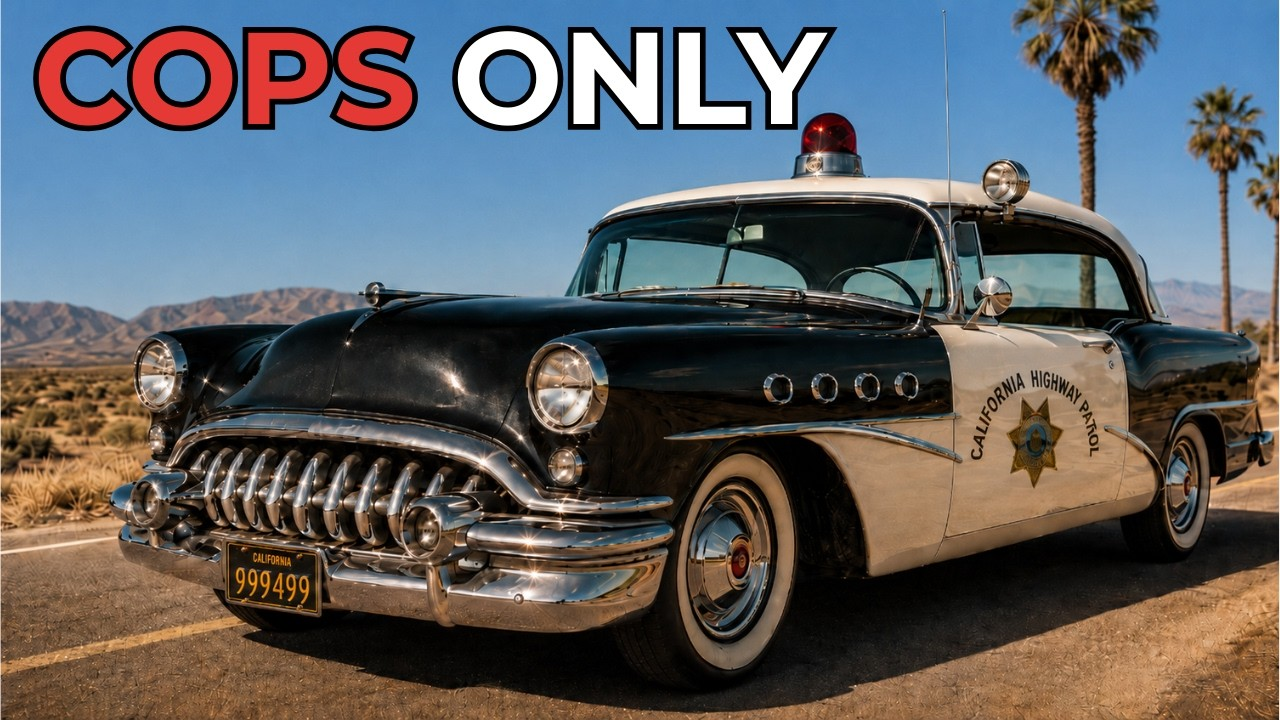
About this VIDEO
-
Buick built a car that appeared in no brochure, no showroom, and no dealer order book anywhere in America.
A hybrid assembled from three different Buicks to win a single state contract. Every documented example went to the California Highway Patrol, and then it became the most recognisable police car in television history.
-
Era
1954–1959
-
Department
California Highway Patrol
-
Runtime
20:47
-
Published
18 Jul, 2026
1. Introduction
-
Why could only police buy the 1955 Buick Century Model 68?
It was the Buick Model 68, body style 4611, a car that appeared nowhere in Buick’s sales or showroom literature and was never offered to the public at any price. The California Highway Patrol wanted a two-door post sedan with the Century’s big engine, a combination Buick did not sell: every 1955 two-door Century was a hardtop, and the only two-door post sedans were Specials fitted with the smaller 264 cubic inch V8.
So Buick built a hybrid to win the contract. It took the body of a Special two-door sedan, grafted on the Century’s front end and chassis carrying the 322 cubic inch “Nailhead” V8, and fitted the largest brakes in the Buick range from the Roadmaster. Buick was contracted to build a reported 270 of them, and 268 are documented as delivered to the CHP, out of more than 737,000 Buicks built that year.
2. What You Will Learn
-
Why the California Highway Patrol went shopping for a new pursuit car in late 1954, and how the competition worked.
-
The formula behind the Buick Century, a muscle-car recipe used nearly a decade before the term existed.
-
Exactly which three Buicks were combined to create the Model 68, and why.
-
What the CHP’s own magazine recorded from the dynamometer testing.
-
Why the order was split precisely in half, and what the patrol was trying to settle.
-
How a car nobody could buy became the most-watched police car in the world, and the scandal behind its television star.
-
How collectors authenticate a genuine Model 68 today.
3. Historical Background
By the mid-1950s the California Highway Patrol faced a crisis of speed. California was booming, new freeways were being laid across the state, and the post-war horsepower race meant civilian cars were getting genuinely fast. On the wide-open highways the CHP was sworn to patrol, its aging fleet was increasingly outmatched by the traffic it was supposed to control.
So in late 1954 the patrol’s Sacramento headquarters invited six major automakers to submit vehicles for consideration. The rules were strict: the car had to meet a long list of performance and durability requirements, and it had to do so at a price that fitted a state agency’s budget.
For Buick this was an interesting problem, because it had the right weapon in the wrong form. The Century was built on a simple, brilliant idea: take the smallest, lightest body in the range, the Special, and fit the largest engine Buick made, the 322 from the top-of-the-line Roadmaster. Small body, big engine, the same recipe that would define the American muscle car of the 1960s, applied nearly a decade before the Pontiac GTO is usually credited with inventing it. The name came from performance too. The original Century of the 1930s was named for its ability to reach 100 miles per hour, a century of miles per hour, which earned it the nickname “the banker’s hot rod.”
4. The Machine Explained
The Model 68 was three Buicks in one, assembled for a single purpose. Two doors were genuinely preferable for CHP work in this era: the patrol of the 1950s spent far more time on traffic enforcement and accident investigation than on transporting prisoners, so four doors were unnecessary. The post sedan, with a solid pillar between the windows and roll-up glass, was also simpler and sturdier than a pillarless hardtop.
-
Body
Buick Special two-door post sedan shell.
-
Front end and chassis
Century, carrying the 322 cu in V8.
-
Brakes
Roadmaster, the largest in the entire Buick range.
-
Internal designation
Model 68, body style 4611.
-
Engine
322 cu in “Nailhead” V8 with a Carter four-barrel carburettor.
-
Compression
9.0:1
-
Output
236 hp at 4,600 rpm.
-
Weight
Around 3,795 lb.
-
Transmissions
Three-speed manual or Variable Pitch Dynaflow automatic.
-
Contract price
Reported at around $2,490 per car, the lowest bid.
-
Built
A reported 270 contracted; 268 documented as delivered to the CHP.
5. What The Records Show
The decision is documented in the April 1955 issue of the CHP’s own Highway Patrolman magazine. Six firms offered vehicles; after thorough testing Buick won the contract for presenting the lowest bid while meeting every requirement and specification. The magazine noted one detail with approval: the newly selected patrol cars had the largest brake surface of any unit tested. Buick’s decision to fit Roadmaster brakes had paid off.
-
The dynamometer test
The April 1955 Highway Patrolman recorded 148 horsepower at the rear wheels and a wheel speed of 108 mph. Those are the numbers the patrol itself published, from its own testing, in its own magazine.
-
A fleet-wide experiment
The CHP split the order precisely down the middle: 135 cars with the three-speed manual and 135 with the Variable Pitch Dynaflow automatic. This was deliberate, so the patrol could compare the two transmissions in real service and settle which suited high-speed pursuit work better. A head-to-head test conducted at speed on the freeways of California.
-
How to identify a real one
Because these cars carried Century front fenders rather than Special fenders, they wear four of Buick’s signature chrome portholes on each side, rather than the three found on virtually every other 1955 Buick two-door post sedan. Four portholes on a two-door post sedan is the fingerprint of a genuine Model 68. Restorers have tracked down survivors by spotting exactly that, in at least one case finding a car abandoned in a field, still carrying the drilled holes in the fenders where the CHP once mounted its spotlights.
-
Real patrol cars, in disguise
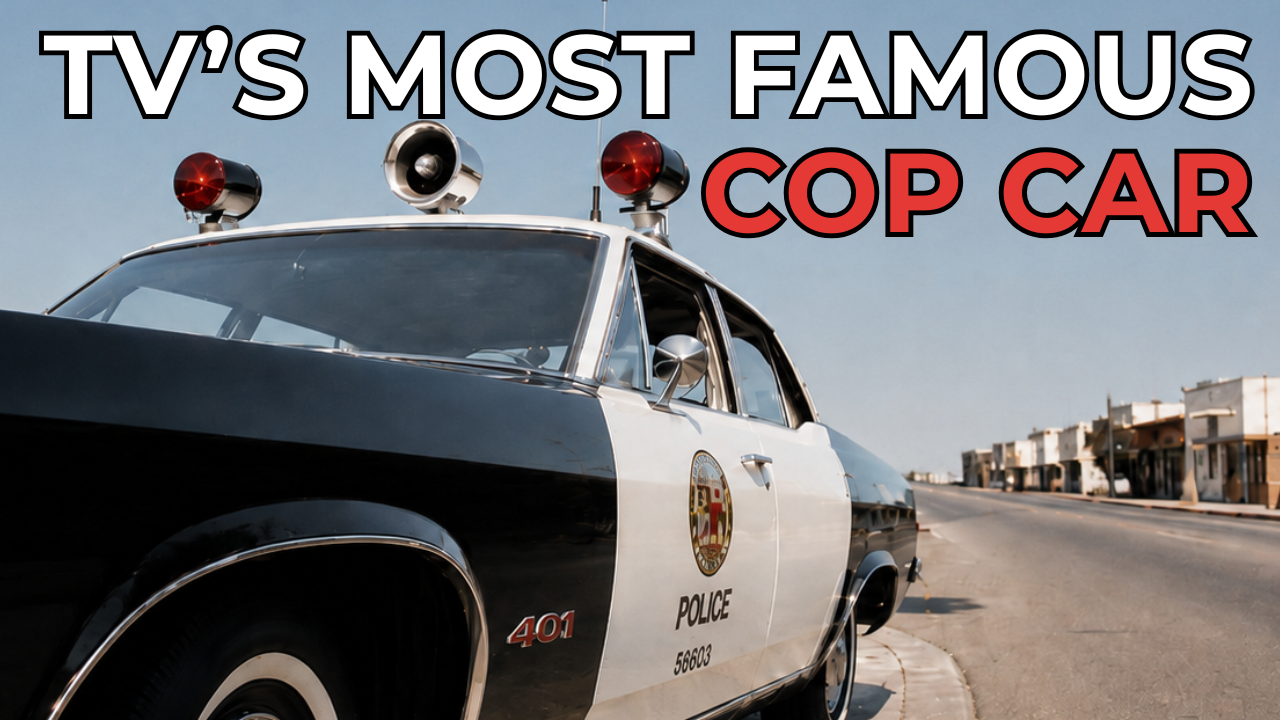
In 1955 producer Frederick Ziv launched the syndicated series Highway Patrol, starring Broderick Crawford as Chief Dan Mathews. The CHP actively supported the production and loaned Ziv real patrol cars, including the brand-new Model 68s. To maintain the fiction that the show was set in an unnamed western state, the production covered the real CHP door emblems with a generic highway-patrol star and taped studio plates over the genuine exempt plates. The attention to authenticity ran deep: Mathews’s radio call sign, “21-50,” was the actual unit number of the then-CHP Commissioner, Bernard Caldwell.
-
The star who couldn’t legally drive
Broderick Crawford, playing television’s most upright highway patrolman, was in real life a heavy drinker whose driving became a genuine problem. He was repeatedly stopped for driving under the influence and eventually had his licence suspended, so some driving scenes had to be shot on private roads where a valid licence was not required. The show’s CHP technical advisor, Officer Frank Runyon, was given the unofficial job of keeping Crawford away from the bottle, with limited success, since the actor was known to bribe crew members to bring drink onto the set. By the middle of 1956 the strain told, and the CHP quietly withdrew its support.
6. Why It Mattered
The Model 68 could have ended as a footnote: a couple of hundred fast police cars that patrolled California freeways and quietly wore out. Instead it became the most recognisable police car in the history of American television.
Highway Patrol became a phenomenon: 156 episodes across four seasons, carried at its peak by more than 200 stations, dubbed into many languages and broadcast in dozens of countries. Ziv was the king of low-budget syndication, and the show’s whole selling point was authenticity, which is exactly why it wanted real CHP cars.
The full circle is what makes this car remarkable. It began as a bureaucratic solution to a low-bid contract, a phantom built only because the CHP wanted a body style Buick did not sell. By every normal logic that should have doomed it to obscurity. Instead, the very fact that it was a real CHP car is why a show chasing authenticity used it. The Buick that nobody could buy became the Buick that everybody saw.
7. Key Takeaways
-
It was never for sale. No brochure, no showroom, no order book. The Model 68 existed only for the California Highway Patrol.
-
Three Buicks in one: Special body, Century front end and engine, Roadmaster brakes.
-
236 horsepower from the 322 Nailhead at 4,600 rpm, in a car weighing around 3,795 lb.
-
Buick won on price. It met every specification and submitted the lowest bid of six manufacturers.
-
135 manual, 135 automatic, a deliberate fleet-wide experiment to settle which transmission suited pursuit work.
-
Four portholes on a two-door post sedan is the fingerprint of a genuine CHP car.
8. Frequently Asked Questions
9. Sources
Every claim on this page is drawn from period magazine reporting, manufacturer records and collector documentation. These are the sources behind it.
-
Highway Patrolman magazine, April 1955
The California Highway Patrol’s own publication, documenting the six-manufacturer competition, the low-bid award, the largest-brake-surface note and the dynamometer results of 148 hp at the rear wheels and 108 mph wheel speed.
-
Buick 1955 production and model records
Factory documentation of Model 68, body style 4611, its specification and the contracted build quantity.
-
Buick marque histories and collector documentation
Records of surviving CHP Model 68s and the four-porthole identification detail used to authenticate them.
-
Highway Patrol production history, Ziv Television, 1955–1959
Documentation of the loaned CHP cars, the disguised door emblems and studio plates, the 21-50 call sign taken from Commissioner Bernard Caldwell, and technical advisor Frank Runyon’s role.
10. Related VIDEOs
By Badges & Chrome — researching the history of American police vehicles from published automotive history, period records, and primary sources. Every claim is verified before publication.
About the research →