
Conversations
Michael S. Champion
Thirty-one years on the California Highway Patrol. He drove the Mustang SSP on road patrol as an officer and as a sergeant, and retired as a Chief, commanding Inland Division.
Michael Champion joined the CHP in 1982 and spent fourteen years on road patrol before moving to staff assignments at the Academy and at Headquarters in Sacramento. He was Area Commander at Yuba-Sutter as a Captain, and finished his career as Chief and commander of Inland Division, the largest of the CHP’s eight statewide field Divisions by area: around 800 officers, eleven Area Offices, three Communications Centers, an Air Operations Unit, and a commercial vehicle enforcement facility at the Nevada port of entry.
He was sent six questions. What came back was not six answers but a continuous account, written over one Sunday in two emails. It is published here the way he wrote it, in his order, with headings added at the natural breaks so the page can be navigated. At his invitation, his longer paragraphs have been divided for easier reading on screen. Nothing has been moved, shortened or rearranged, and nothing has been added inside his text.
Michael Champion speaks here in a personal capacity. Nothing on this page is offered on behalf of the California Highway Patrol or represents the agency in any official form. In his own words, written in a separate email on 1 September: “the information I have shared is solely from my personal experience and is no way representative of the CHP in any official capacity or form. I only offer the information to share my personal experience… and don’t want to cast any negative light on the CHP as an agency.”
Six typing slips have been corrected silently in his text. At his request one year has been corrected (his second Speed Team Mustang was a 1990 model, not a 1991), and one phrase has been revised to include the felony incidents he responded to. Nothing else has been altered, shortened or moved. The quotation above is abridged where marked.
A cadet, a new Mustang, and five hundred miles
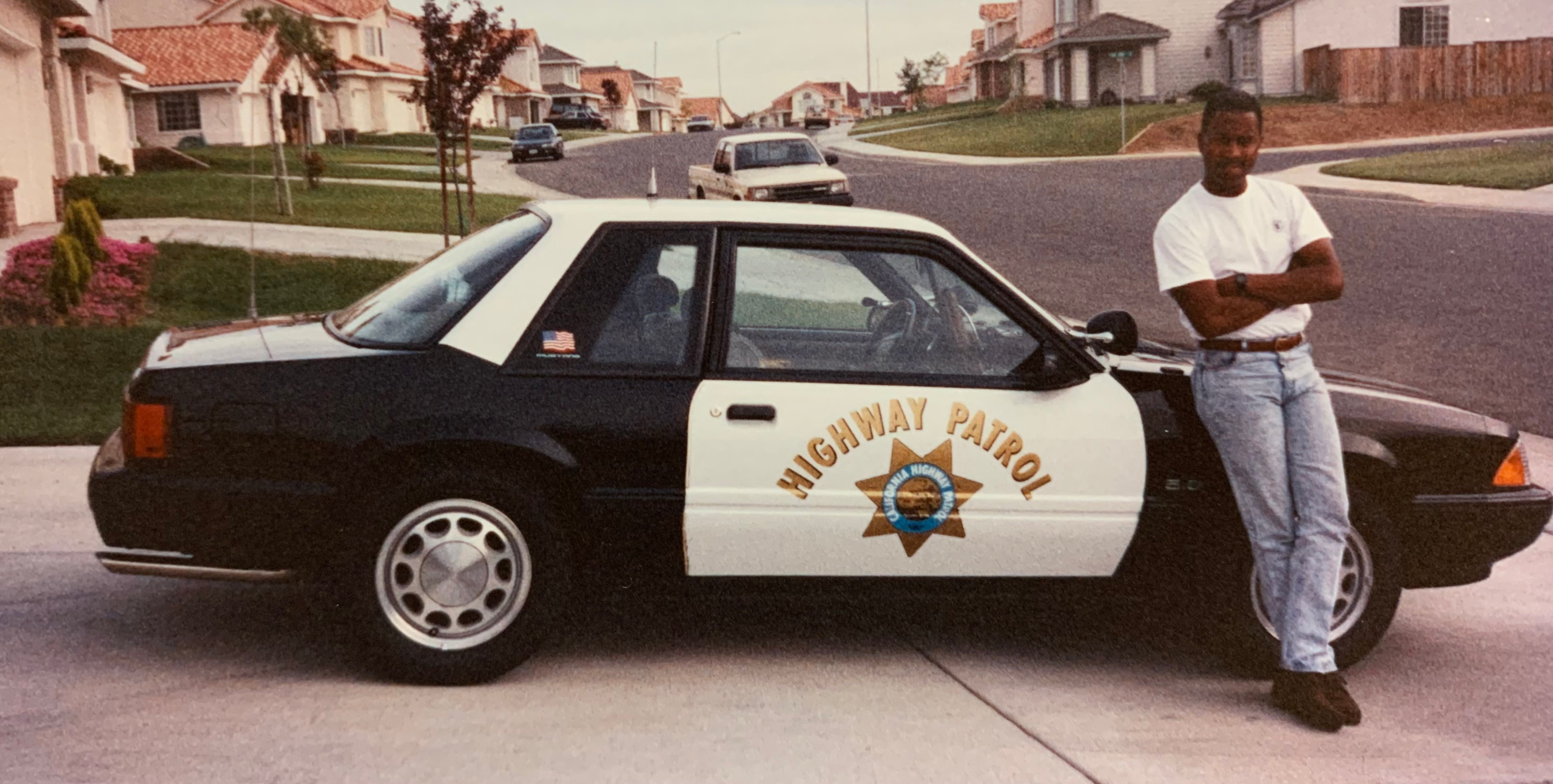
Eric, as mentioned previously, as a CHP Academy cadet I had the opportunity to drive one of the first in the initial order of 400 CHP Mustang SSPs from the former CHP Motor Transport Section fleet facility in Sacramento to the CHP El Cajon Area office located in San Diego county.
Upon delivering it, in exchange I drove a runout 1980 Dodge St. Regis back to Sacramento for turn in and retirement. I’m not positive now but believe it had a light bar. I recall it being seriously underpowered, and believe it had the 318 V8 since it could barely hold 55 MPH climbing the steep I-5 northbound “Grapevine” grade out of Los Angeles County on the drive back to Sacramento. It was a long 500 mile drive, but it gave me ample opportunity to familiarize myself with the basic driving characteristics of the 1982 Mustang SSP.
While serving in the US Air Force I had previously owned a 1979 Mercury Capri built on the same FoxBody platform, although it had a V6 with a 4 spd MT also. Putting several thousand miles on that Capri made the transition to the body/class size of the Mustang SSP very familiar to me, although the V8 was much more powerful than the V6 in my Capri. I just had to learn how to drive the Mustang SSP as a CHP enforcement vehicle.
Thirty days and three training officers
After graduating from the Academy in March 1983, and being assigned to the CHP Oceanside Area office located in north San Diego county, in accordance with CHP policy I was assigned to work my initial 30 working day break-in training period with 3 separate Field Training Officers (FTO). I spent 10 days with each FTO as the primary driver during this training period while driving and conducting routine road patrol duties expected of all CHP officers.
My first FTO had a 1981 slick top Dodge Diplomat, so that became the first CHP enforcement vehicle I drove officially on road patrol. My 2nd FTO had a new 1982 Mustang SSP which I was already familiar with, and my 3rd FTO also had a 1981 slick top Dodge Diplomat. Prior to driving the SSP my FTO had me complete a Mustang orientation checklist demonstrating my ability to manually shift and operate the Mustang as an enforcement vehicle which I had no problem successfully completing. I had no training with the Mustang SSP during my CHP Academy EVOC training.
Upon successful completion of my 30 day break-in training period the first enforcement vehicle I drove solo on road patrol was a slick top 1982 Chevrolet Impala. I preferred that much more than the Diplomat for its larger size, and better engine performance and suspension handling at high speeds. It drove smooth and stable for a large enforcement vehicle.
The cars I was assigned
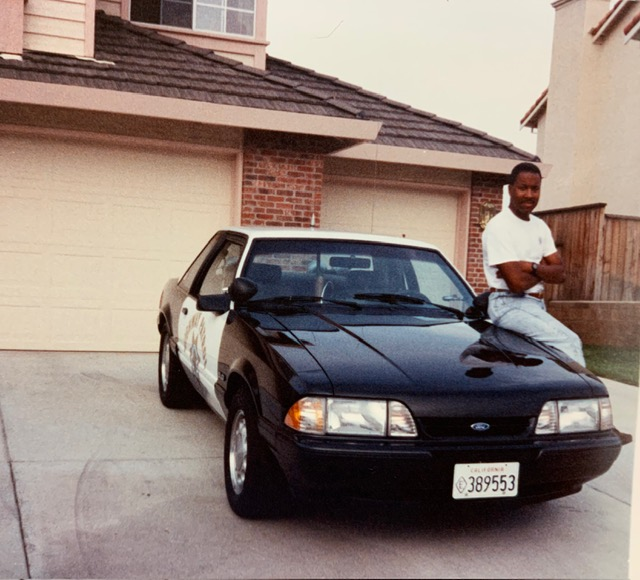
My first assigned patrol car (shared by me as the primary driver and an alternate officer working the day shift preceding mine) was a new 1985 Dodge Diplomat while working in the CHP Oakland Area office from 1984-1988, with a Jetsonic light bar so I remember it well. Assigned cars were to only be driven by the 2 main officers unless no other patrol cars were available, so my car partner officer and I drove that Diplomat over the course of about 2 yrs to its runout mileage which then was set at 85K. In exchange for that I was assigned a new 1987 Chevrolet Caprice with another Jetsonic light bar.
Both of these vehicles stand out to me for different reasons. The Diplomat had bucket seats, manual crank windows, and was not very fast with the 318 V-8. It had very poor acceleration from a standing start, and was not very stable at high speeds in vehicle pursuits. Conversely, the Caprice had a strong V8 engine, a center console which the Diplomat did not, rode very smoothly and handled well and stable at high speeds in excess of 100 MPH. It also was the first CHP enforcement vehicle I drove having power windows so that was a big plus for me.
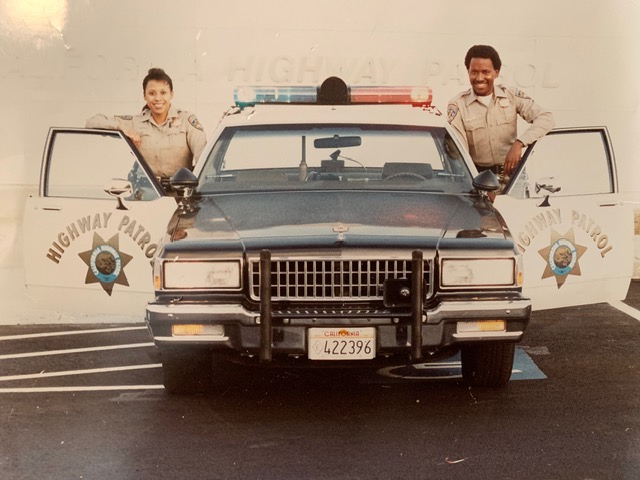
Of those 2 vehicles the Diplomat was the only one that suffered a mechanical failure when I was accelerating hard up a freeway onramp and the transmission failed between gear shifts rendering it immobile. I had to coast and back it down the on ramp luckily that had an uphill grade. Once getting it back on city streets in Oakland I called for a tow truck and it was towed back to the CHP Oakland Area office. Our automotive technician returned it to the local Dodge dealer where the transmission was replaced under warranty and I think I had it back to drive within a few days.
Due to my transferring to the CHP Marin Area office in 1988, I did not reach the runout mileage in my 87 Caprice. In the Marin office I did not have the seniority initially for another assigned car, so I drove pool cars (unassigned) which were mainly 87 Caprices.
Shortly after my arrival in that office I was selected to participate on the CHP Golden Gate Division Aerial Car Enforcement (ACE) 10 officer Mustang SSP Speed Team for 1 year. I was assigned a 1988 Mustang SSP as a take home patrol vehicle. Most CHP vehicles are not take home vehicles and are parked at the Area offices for use on all shifts due to the CHP having approximately 7500 officers. Since our Mustang duties required us to travel and work in all 9 San Francisco Bay Area counties within the CHP Golden Gate Division it required us to start and end our shifts at home due to the travel time/miles to and from our targeted enforcement locations which varied.
I transferred again to the CHP Solano Office in 1990 while on the team, and when the 1 year Mustang assignment was over I went back to regular road patrol duties in that office primarily driving 1990 Ford LTD Crown Victorias both as slick tops, and also with the Jetsonic light bar. The US went to war with Iraq and since I was also in the US Air Force reserve I was mandatorily ordered back to active duty in January 1991, requiring me to take military leave from the CHP for several months. When I returned from military leave I was selected to return to the Speed Team for another year and was assigned a 1990 Mustang SSP.
After that 1 year assignment ended I promoted to Sergeant in 1992, and was transferred to the CHP Baldwin Park Area office in Los Angeles county. There, I primarily drove 1991 LTD Crown Victorias which were assigned exclusively to the Sergeants as is the practice in most CHP Area Offices statewide. As field supervisors, having dedicated enforcement vehicles always ready and packed with the additional equipment required for Sergeants is essential to their supervisory duties on road patrol, and when required to perform as Incident Commanders at emergency incidents.
What people get wrong about the Mustang
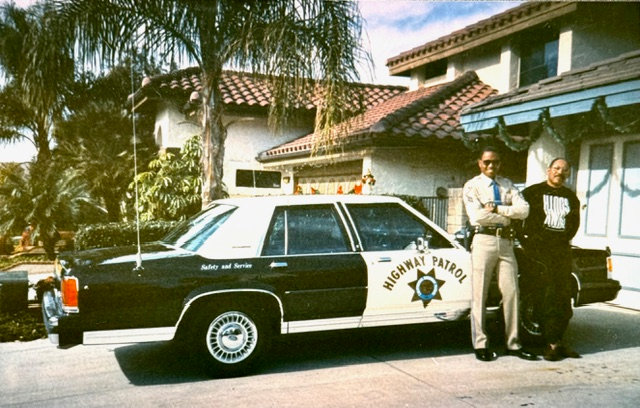
I think the primary false impressions about the Mustang SSPs are first that they replaced our standard full sized enforcement vehicles. That was false. The Mustangs were selected as part of a CHP Special Purpose Vehicle study which originally involved the 1979 Camaro. When the Camaros were rejected by the CHP the Mustang was developed with Ford, evaluated, and procured as the Camaro replacement Special Purpose Vehicle intended to augment, but not replace the standard full size fleet vehicles.
The second misconception was that CHP Mustangs were never used to transport prisoners. That also was false. Although it was not the preferred enforcement vehicle for prisoner transportation Mustangs were also primarily used on regular patrol shifts, so those officers had the full range of responsibilities as other officers driving full size patrol vehicles. The ACE program was a special program, not exclusive to Mustangs on Speed Teams in some of the 8 statewide CHP field Divisions, but most Mustangs were assigned statewide to local Area office fleets and driven daily on road patrol shifts along with the full size enforcement vehicles.
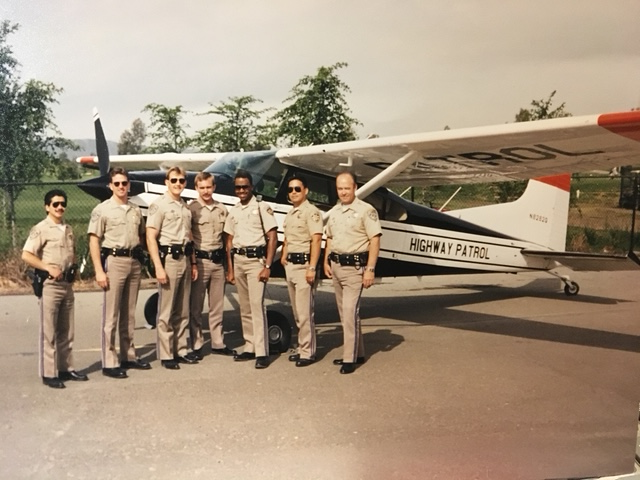
When officers driving Mustangs had to make arrests the goal was not to tie up another officer by having to transport their prisoners, but instead when possible transport your prisoners to jail in the Mustangs as other officers were required to do. CHP policy mandated that all prisoners being transported in a non-cage/barrier equipped patrol vehicle ride secured in the R/F seat and that policy applied also to Mustang SSP enforcement vehicles. I transported prisoners to jail handcuffed and secure in the R/F seat of my Mustang as I had done many times in full sized patrol vehicles.
As needed I also provided rides to the public in the R/F seat of the Mustang SSPs who required transportation off the freeway and/or to a safe location from their disabled vehicles. I carried no prisoners or passengers in the rear seat of my Mustangs, and the only time I had a passenger back there was when I gave news media ride-alongs with the reporter in the R/F seat and the camera operator in the rear seat.
I think another misconception was that CHP Mustangs were never driven in inclement weather, or at night during the “graveyard” late night shift. CHP officers pair up in one vehicle on the graveyard shift, but Sergeants work solo on all shifts so while working as a Sergeant in the CHP San Francisco Area office from 1993-1996, I occasionally drove a 93 Mustang SSP on road patrol. This also was the last time of my driving a CHP Mustang, and it ended one night with me involved in my last Mustang SSP vehicle pursuit. Due to safety reasons when the errant vehicle exited the freeway at high speeds onto the streets of San Francisco I elected to terminate the pursuit. That ended my era of driving the first 82 and last 93 CHP Mustang SSP.
Rain, night, and who decided
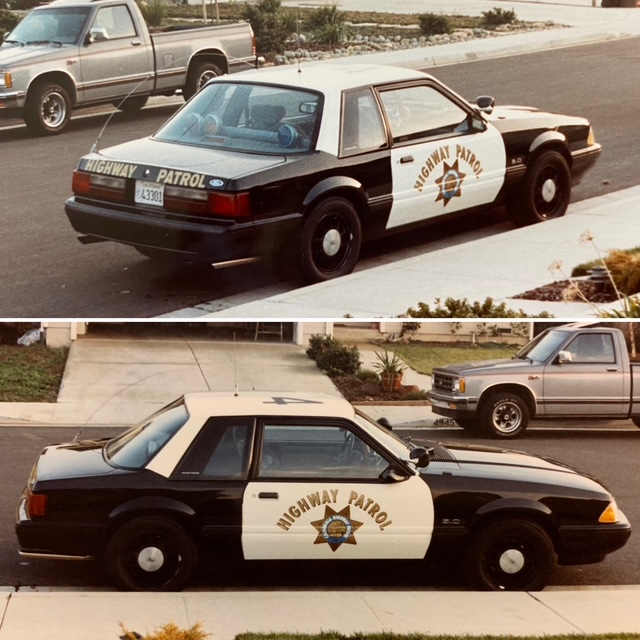
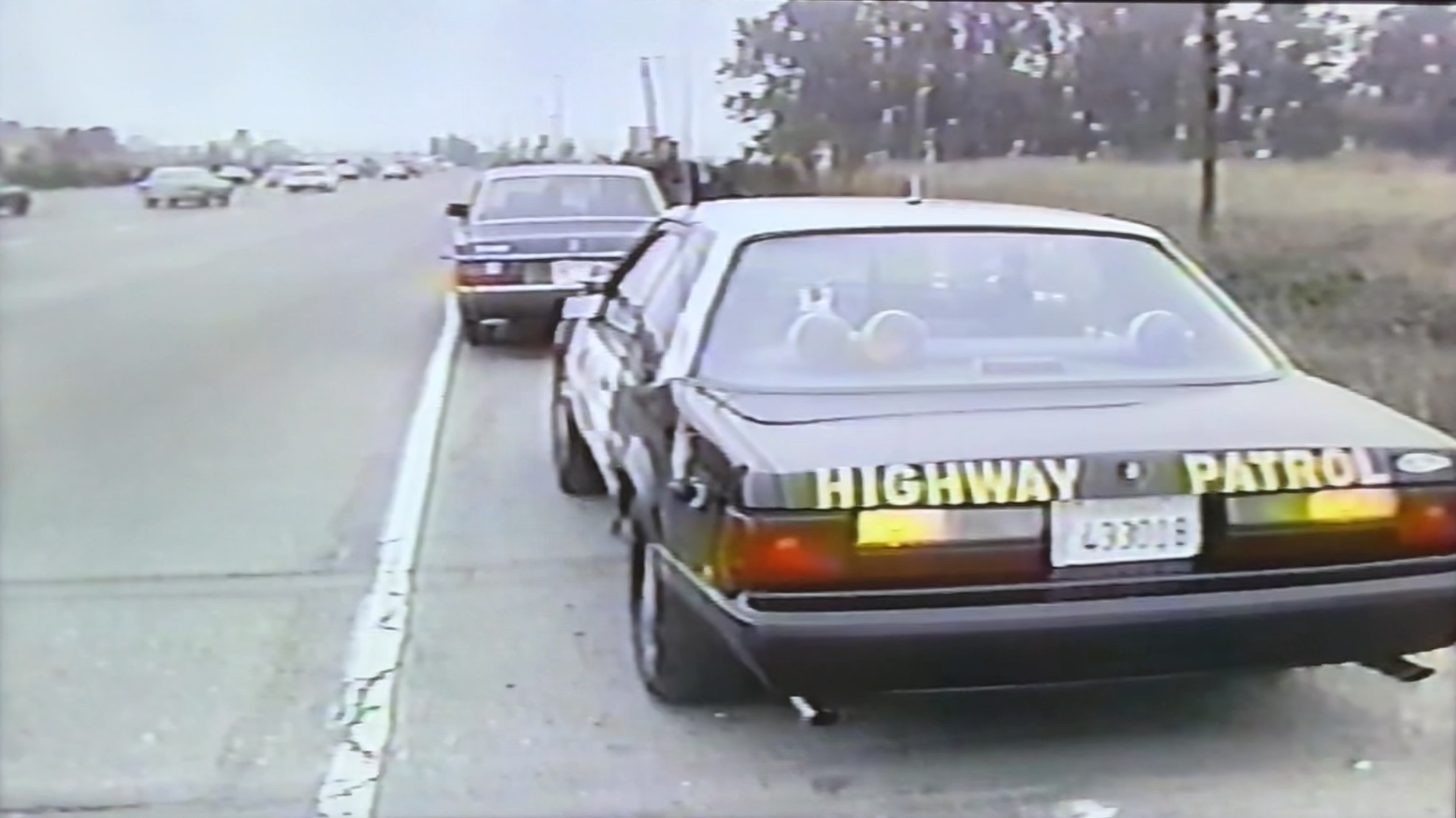
Local Area office commanders had the discretion to manage their local fleets, so although some enacted prohibitions on driving Mustangs in the rain, or at night that was not a general statewide policy so it varied from office to office. These prohibitions were intended to help achieve the CHP’s Occupational Safety Program goal of preventing and/or minimizing enforcement vehicle preventable collisions across the fleet. On wet surfaces due to their horsepower and light rear ends, the Mustang SSPs would easily lose traction on wet/oily surfaces and required extremely skilled drivers vs standard patrol cars. This goal rested heavily on the local CHP Area Commanders, in conjunction with their individual Area office fleet management responsibilities.
After driving the Mustang SSPs over its entire 12 model years with the CHP I became very experienced accruing tens of thousands of miles in them, and always respected its limitations exercising due care when driving it in inclement weather. Officers who did not regularly drive the Mustang SSPs on road patrol had to be extremely careful when driving it.
What changed in the cars
I think during my time on road patrol in my era stemming from 1983-1996, the biggest change in vehicles was relative to the adoption of technology in the enforcement vehicles. When I started on the CHP in 1982, the radio control head and emergency light control head were separate units simply operated by a few toggle/rocker switches and knobs.
Also, in my first office our fleet only had 1 patrol vehicle with a light bar (Federal TwinSonic) which I drove on occasion. All of the other enforcement vehicles were slick tops only equipped with a drivers side red spot lamp and a single amber and red lamp located on the left side of the rear deck. Most also had no prisoner cages/barriers. I did not like driving cage cars because of my 6’00” height the rearward movement restriction of the driver’s seat in those vehicles made driving them uncomfortable for me.
Simpler times, and the other side of it
Looking back on that nostalgic period reminds me of how simple operating a patrol vehicle was, when your main focus was on driving, not manipulating controls. I never had a problem fulfilling my full range of road patrol officer responsibilities with those simple controls, and over time with the adoption of new light bars, radio controls, and other technology in the cars I missed those simpler times.
After I promoted to Sgt in 1992, and was assigned to the CHP Baldwin Park Area office (Los Angeles county) and to the San Francisco Area office in 1993-1996, is when I believe technology began to really expand in our patrol vehicles with the introduction of Mobile Digital Computers and in-car mobile dash cameras. This equipment enhanced the safety of officers, but it also made them much more accountable which I believe is a good thing that inspires confidence in CHP officers and also with the public.
However, this equipment can also be a distraction if not used properly so that is the flip side to having the advanced vehicle equipment. Officers need to be good drivers and recognize the limitations, and sometimes distractions that come with new technological devices incorporated in enforcement vehicles for safe driving. This is purely my personal opinion having seen the evolution of patrol vehicles in this regard during my era on the CHP.
What the Academy could not simulate
Driving is a very important critical task for all CHP officers since the car is their office and over the course of their career most officers will have driven tens of thousands of miles, if not hundreds of thousands of miles. I think Academy EVOC training is necessary and critical to establishing the basic skills to safely operate CHP enforcement vehicles. However, it’s a sterile environment and unfortunately it’s not safely feasible to incorporate real-world training simulating driving at high speeds in freeway traffic and on surface streets. From that aspect, as a new officer graduating from the CHP Academy at 25 years old looking back, I did not know what I did not know yet.
Driving safely in all types of weather, day and night, and every hour of the day, constantly getting in and out of a patrol car on traffic stops and at emergency incidents while wearing a duty belt, and other police protective equipment is a very physically demanding task I don’t think most people realize. The demands of high speed driving and particularly vehicle pursuits, coupled with the civil liability attached are also both physically and mentally draining and stressful.
As a CHP Academy cadet I had no real idea of the driving demands that would be placed on me. Luckily, I had some very capable and experienced FTOs. I became close friends with my last FTO, was in his wedding and we are still lifelong friends today although I retired as a Chief and he a Lieutenant that eventually was subordinate to me when I promoted to Assistant Chief in the CHP Valley Division.
While working at the CHP Oakland office from 1984-1988, I was asked/selected by one my sergeants to return to the CHP Academy and be certified as a Field Training Officer also. So, I got to personally see what it was like training new officers from the Academy on how to be safe and competent drivers of CHP enforcement vehicles.
Fourteen years without a collision
I felt very fortunate that during my 14 years on road patrol, although I made thousands of traffic stops, responded to numerous life threatening, high-risk, and felony incidents, including many high speed vehicle and motorcycle pursuits, unlike a lot of other officers I was never involved in a patrol car collision which was noted on our name tag/safety award worn on our uniform shirts. I attribute my success to being properly trained as a new officer, always being a car lover respecting each model’s performance and limitations, and remembering to try and always exercise sound professional judgment while driving a CHP enforcement vehicle. It was a responsibility I never took lightly.
Where to send someone who wants to understand it
Since I worked my way up from Cadet, Officer, Sergeant, Lieutenant, Captain, Assistant Chief, and Chief with increasing levels of authority and responsibility in each rank I always, and even retired still try to be an ambassador/recruiter for the CHP with my neighbors and friends. To those seriously interested in wanting to gain more knowledge about the CHP and its history, since the CHP is one of the largest police agencies in the US and has 102 statewide offices I encourage them to visit one of the Area offices near them which are open to the public and to talk with the officers there. They can answer a lot of questions about the evolution of the CHP and its enforcement vehicles, and point them to online and other printed resources to educate them.
The popular CHiPs TV series was in its last season when I graduated from the CHP Academy in 1983, and prompted people to ask me a lot of questions about the CHP and its vehicles and motorcycles. I always tell them the show was intended to be entertaining and not factual. Very little of what that show depicted involved the actual daily duties/activities of a CHP officer.
For those that are interested in CHP history/vehicles, and live in the Sacramento area as I do I also encourage them to visit the CHP Museum located at the CHP Academy in West Sacramento. It contains a lot of CHP history on vehicles, and other artifacts are on display involving CHP history. I also highly recommend the book written by Robert Wick, as it’s the most factual document I’ve seen relative to the history of the CHP and its vehicles. The museum also owns several former CHP enforcement vehicles including a Mustang SSP, 79 Camaro, and a 60s eras Dodge.
Additionally, there are several owners of restored CHP vehicles who not only display them at local car shows, but also occasionally loan them to the CHP Academy/museum for display. On my last visit there in August a restored 1979 Camaro was on display which was a treat to me because I never saw one in service when I started on the CHP in 1982.
This is my overall perspective of my 31 year experience as a member of the California Highway Patrol working in 7 CHP Area offices, 5 of the 8 CHP Field Divisions, and in several key management assignments within CHP Headquarters in Sacramento.
— MC
A postscript, and the 1994 Caprice
Eric, I forgot to mention that upon my arrival to the CHP San Francisco Area office as a Sergeant in late 1993, in addition to occasionally driving the 93 Mustang SSP, I also drove the 92 Crown Victoria and the 94 Chevy Caprice which was my favorite patrol car there. Sergeants typically in most CHP Area offices receive the new patrol cars from the fleet facility to break-in and then as the officers run out a vehicle the Sergeants vehicle is rotated to them subsequent to another new replacement vehicle arriving to replace that one again as a Sergeants vehicle. In some cases if multiple new replacement vehicles arrive at an office at times they will just go immediately to the officers.
I didn’t care much for the exterior styling of the 94 Caprice but its engine performance and handling at high speed made it a welcomed trade off. Other than the Mustang SSP, during my era on road patrol it was the only other enforcement vehicle with enough power to break rear tire traction from a standing start which was a welcomed ability when attempting to re-enter freeway traffic stopped on the shoulder of a busy metropolitan full freeway such as in the Los Angeles and San Francisco Bay Areas.
A pursuit across the bay
As previously mentioned, while working the graveyard shift driving the 94 Caprice, and stopped on Yerba Buena Island that was mid-way across the San Francisco/Oakland Bay Bridge I observed a vehicle pass me on the eastbound lower deck traveling at a high rate of speed I estimated to be 85 MPH in a 50 MPH zone. The Caprice quickly accelerated to over 100 MPH and I was able to overtake the vehicle as it exited the bridge continuing on I-80 eastbound toward Berkeley. After turning on my lights and siren the vehicle accelerated to over 100 MPH attempting to evade me but the Caprice had no problem keeping up with it in the light traffic, with more power in reserve.
I called ahead to the adjacent CHP Oakland Area office to have one of their patrol vehicles take over the pursuit, but after passing one of their units driving I believe a 92/93 Crown Victoria at over 100 MPH the officers contacted me on the radio advising they could not catch up to us and requested that I continue as the primary unit in the pursuit.
I pursued the vehicle with the CHP Oakland Area unit in trail for about 10 miles to the Carquinez Bridge in Vallejo where it drove through the barrier of a closed toll booth lane, then a short time later exited the freeway turning around to re-enter I-80 again going westbound. I pursued the vehicle for about another 8 miles until it exited the freeway into the city of Berkeley at which time I turned over the pursuit to the Berkeley Police Department and returned to my area of supervisory responsibility in San Francisco county. Ironically, I can’t remember the make and model of that vehicle now.
After road patrol
The San Francisco office was the last office that I worked road patrol as I was selected for an assignment in late 1996 at the CHP Academy in West Sacramento as the Weapons Training Unit Supervisor/Sergeant. The job had supervisory responsibility for all cadet and in-service officer weapons training, as well as managing the entire CHP weapons program, including every weapons system, and all ammunition owned by the agency. I served in that position until 1998, when I promoted to Lieutenant and was assigned to another Headquarters staff position in the Office of Dignitary Protection.
— MC